
By Afla KC
Level up hr solution, Digital marketing exicutive
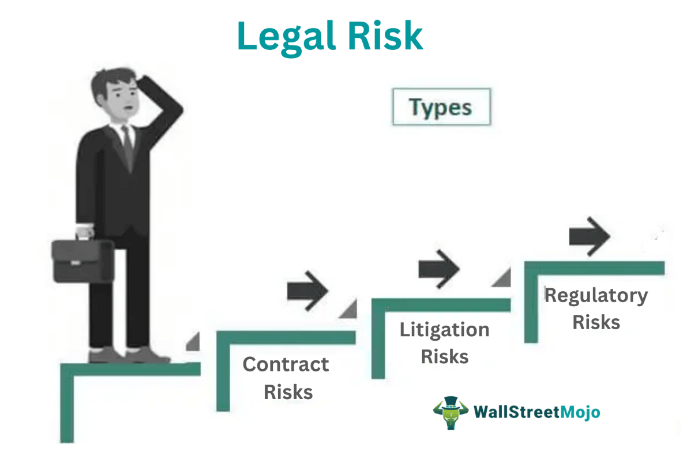
Every HR professional and manager eventually faces the same uncomfortable task: documenting an employee’s performance problems. The goal is straightforward – to create a record that supports coaching, improvement, or eventual separation. But the risk is equally real. Poorly written documentation has led to countless wrongful termination claims, discrimination lawsuits, and regulatory penalties. One careless phrase can turn a legitimate performance dismissal into a costly legal battle.
The tension is real. You need to document thoroughly enough to defend your decisions, but carefully enough to avoid creating legal exposure. This article explains how to document performance issues correctly – in a way that protects both the employee and the organisation.
WHY POOR DOCUMENTATION CREATES LEGAL RISK
Performance documentation becomes evidence in legal proceedings. When an employee files a claim for wrongful termination, discrimination, or retaliation, the first document a lawyer requests is the employee’s personnel file. That file will be read by judges, arbitrators, and opposing counsel. Every word matters.
Poor documentation creates risk in three specific ways. First, vague or subjective language – such as “bad attitude” or “not a team player” – can be interpreted as bias or pretext for illegal discrimination. Second, inconsistent documentation – where one employee receives written warnings while another with identical issues receives none – supports claims of selective enforcement or retaliation. Third, documentation that includes emotional language, personal opinions, or irrelevant personal details can be used to paint the organisation as unfair or hostile.
The solution is not to avoid documentation. The solution is to document correctly.
THE LEGAL STANDARD: WHAT COURTS LOOK FOR
Courts and labour tribunals evaluate performance documentation against a simple standard: is the documentation honest, specific, and contemporaneous? ‘Honest’ means the document accurately reflects what actually happened, without exaggeration or omission. ‘Specific’ means the document describes observable behaviours and measurable outcomes, not general impressions. ‘Contemporaneous’ means the document was created close in time to the event it describes, not weeks or months later when memories have faded.
When these three elements are present, the documentation carries weight. When they are absent, the documentation becomes a liability. Every performance note, warning letter, or improvement plan should be written with this legal standard in mind.
WHAT TO INCLUDE IN PERFORMANCE DOCUMENTATION
Effective, low-risk performance documentation contains five essential elements. Each element serves a legal and practical purpose.
The first element is the date and time of the incident or performance issue. This establishes contemporaneousness. A document created the same day as the incident is far more credible than one created weeks later.
The second element is a neutral, factual description of the observable behaviour or outcome. Instead of writing “the employee was rude”, write “the employee raised their voice and interrupted the customer three times during a ten-minute call.” Instead of “the employee missed deadlines”, write “the employee submitted the quarterly report two days after the agreed due date on three separate occasions: March 5, April 12, and May 18.”
The third element is the business impact or policy violated. Explain why the behaviour matters. For example: “Missing these deadlines delayed the client billing cycle by five days, resulting in a penalty of ₹15,000.” Or “This behaviour violates section 4.2 of the employee handbook regarding respectful workplace conduct.”
The fourth element is the employee’s response or explanation, if any. After discussing the issue, document what the employee said. This demonstrates that the employee was heard and that the documentation is not one-sided. Use direct quotes when possible, such as: “The employee stated, ‘I was not aware that the deadline had moved.’”
The fifth element is the specific action required to correct the issue and the timeline for improvement. For example: “By June 15, the employee must submit all weekly reports by 5 PM Thursday. The manager will provide a daily checklist reminder for two weeks.” This turns documentation from a record of failure into a tool for improvement.
WHAT TO NEVER INCLUDE IN PERFORMANCE DOCUMENTATION
Certain types of content are legally dangerous and should never appear in performance documentation. These create almost automatic risk.
Never include subjective character judgements. Phrases such as “lazy”, “incompetent”, “disrespectful”, “unreliable”, or “bad attitude” are opinions, not facts. They cannot be proven or disproven. A plaintiff’s lawyer will argue that these words mask illegal bias.
Never include protected characteristic information. Do not mention an employee’s age, race, religion, gender, pregnancy status, disability, medical condition, marital status, or national origin anywhere in performance documentation. Even a seemingly harmless note – “She has been distracted since her maternity leave” – creates a prima facie case for discrimination.
Never include emotional or inflammatory language. Avoid words like “furious”, “shocked”, “disgusted,” or “betrayed”. Documentation should read like a police report, not a diary. Calm, neutral language signals professionalism and fairness.
Never include speculative statements. Do not write “I think the employee is not trying hard enough” or “It seems like she doesn’t care.” If you do not know something as a fact, do not write it.
Never include unrelated past issues that were already resolved. Once a performance issue is closed – meaning the employee corrected it and no further action was taken – it should not be resurrected in new documentation. Doing so looks like piling on or retaliation.
THE RIGHT WAY TO DELIVER PERFORMANCE FEEDBACK
Documentation is not written in isolation. It is created during a conversation between the manager and the employee. How that conversation happens affects the legal defensibility of the documentation.
Always hold the performance discussion in a private setting, not in open office areas or hallways. Begin by stating the specific behaviour or outcome you observed, using the factual language you will later document. Give the employee an opportunity to respond without interruption. Listen to their explanation – it may reveal underlying issues such as unclear expectations, resource shortages, or personal emergencies that change how you proceed.
After the conversation, write the documentation on the same day. Use the five essential elements described above. Then share the documentation with the employee, either by printing a copy or sending it via email. Ask them to acknowledge receipt by signing or replying. If the employee refuses to sign, note that refusal on the document – for example: ‘Employee declined to sign after reading. Copy provided on June 10.”
Giving the employee a copy serves two purposes. It prevents future claims that they never saw the warning. And it gives them an opportunity to provide a written rebuttal, which you must also include in the file. An employee’s rebuttal does not weaken your case – it shows that you followed a fair process.
COMMON DOCUMENTATION MISTAKES AND HOW TO AVOID THEM
Even well-intentioned HR professionals and managers make recurring mistakes. Recognising these patterns helps avoid legal exposure.
The first common mistake is backdating documentation. Some managers, realising they failed to document earlier issues, create documents with past dates. This is fraud. Backdated documents are easily exposed through metadata and email trails. If you missed documenting something, date it today and honestly state: “This document summarises a discussion that occurred on May 15, as recalled on June 1.”
The second mistake is over-documenting minor issues. Not every mistake requires a written note. Document only issues that are serious enough to affect performance ratings, eligibility for promotion, or continued employment. Over-documentation makes it appear that the organisation was searching for reasons to terminate, which supports claims of bad faith.
The third mistake is failing to document positive performance alongside negative. A file containing only warnings and criticisms looks one-sided and punitive. Whenever you document a performance problem, look for an opportunity to also document improvement or positive contributions. This creates a balanced record.
The fourth mistake is using different documentation standards for different employees. If you write formal warnings for one employee’s lateness but only verbal reminders for another employee’s identical lateness, you have created evidence of disparate treatment. Apply the same documentation thresholds to all employees in similar roles.
SPECIAL SITUATIONS: PERFORMANCE IMPROVEMENT PLANS (PIPs)
Performance improvement plans are formal documents that outline specific deficiencies, required improvements, timelines, and consequences of failure. PIPs are high-risk documents because they are often used to build a termination case.
A legally safe PIP must include measurable, objective goals. Avoid goals like “improve communication” or “be more proactive”. Instead use: “Respond to all client emails within 4 hours during business days” or “Complete the monthly reconciliation report by the 5th of each month with fewer than three errors”.
The PIP must also include reasonable support. Document what training, resources, or manager check-ins the employee will receive. A PIP without support is a set-up for failure, which courts view as constructive discharge.
Finally, the PIP must have a clear duration and decision date. Typically 30, 60, or 90 days. At the end of the period, document the outcome – met, partially met, or not met – with specific evidence. Never extend a PIP indefinitely. That signals that the organisation does not truly know what it wants.
WHEN TO INVOLVE LEGAL OR HR EXPERTS
Not all performance documentation should be handled solely by a line manager. Certain situations require review by HR or legal counsel before documentation is finalised. These include documentation involving any protected characteristic mentioned by the employee, documentation created after the employee has filed a complaint or requested an accommodation, documentation of an employee who has recently returned from medical or family leave, and documentation that may lead to termination within the next 60 days.
In these situations, have a neutral party review the documentation for the five dangerous content types described earlier. One extra review can prevent a lawsuit.
CONCLUSION
Documenting performance issues is not optional. Without documentation, you cannot manage performance fairly, defend termination decisions, or demonstrate compliance with labour laws. But documentation done poorly is worse than no documentation at all – it becomes evidence against you.
The key is to write documentation that is specific, factual, contemporaneous, and neutral. Include dates, observable behaviours, business impact, employee responses, and required corrective actions. Exclude subjective judgements, protected characteristics, emotional language, speculation, and unrelated past issues.
When you document this way, you create a tool for improvement, not a weapon for litigation. You protect the employee’s right to fair process and the organisation’s right to manage performance. That is not just legally sound – it is good management.
HOW LEVEL UP HR SOLUTIONS CAN HELP
Performance documentation requires a strong HR foundation. Without clearly written policies, consistent employee files, and compliance-aligned processes, even good documentation can fail under legal scrutiny.
Level Up HR Solutions provides the documentation infrastructure that makes performance management legally defensible.
We offer policy drafting to ensure your performance management policies are clear, compliant, and consistently applied across the organisation. We provide employee file structuring so that performance notes, warnings, and PIPs are stored in audit‑ready order, easily retrievable when needed. Our compliance documentation services help you stay ahead of labour laws, including the Industrial Relations Code, POSH Act, and state‑specific rules. And we offer payroll alignment to ensure that performance‑related pay decisions – such as bonuses, increments, or deductions – are documented and legally sound.
Stop exposing your organisation to legal risk through poor documentation. Let Level Up HR Solutions build the systems that protect you.