
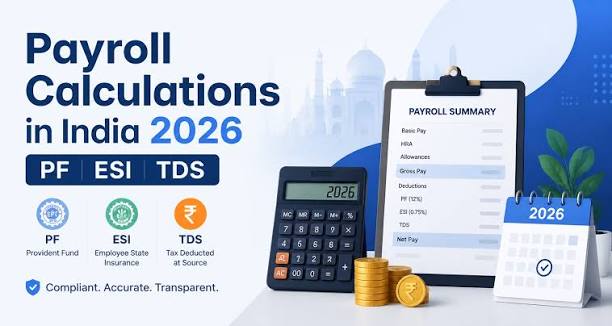
Payroll is one of the most important functions in any organization. Employees expect their salaries to be paid accurately and on time, while businesses must ensure that every deduction, contribution, and statutory payment complies with government regulations.
However, payroll management in 2026 is no longer limited to calculating salaries. Human resource teams are expected to manage Employee State Insurance (ESI), Provident Fund (PF), Tax Deducted at Source (TDS), Labour Welfare Fund (LWF), gratuity, bonuses, professional tax, and various other compliance requirements.
Even a minor error can lead to penalties, legal disputes, employee dissatisfaction, and reputational damage.
For many businesses, payroll compliance can feel overwhelming. The good news is that understanding the basics can make the process much easier.
This guide explains the essential components of payroll compliance and highlights the steps organizations should take to remain compliant in 2026.
Why Payroll Compliance Matters
Payroll compliance refers to an organization’s responsibility to calculate salaries correctly, deduct statutory contributions, maintain proper records, and submit payments within the required time frame.
Effective payroll management helps organizations:
-
Avoid financial penalties
-
Improve employee trust
-
Ensure compliance with labour regulations
-
Maintain accurate financial records
-
Reduce administrative errors
-
Improve operational efficiency
A well-managed payroll system protects both employers and employees.
Understanding Payroll Components
Before exploring the major compliance requirements, it is important to understand the basic components of employee compensation.
A salary structure generally consists of the following elements:
-
Basic salary
-
House rent allowance (HRA)
-
Conveyance allowance
-
Special allowance
-
Performance incentives
-
Bonuses
-
Overtime compensation
-
Deductions
Once these components are determined, organizations must calculate various statutory contributions.
Employee State Insurance (ESI)
The Employees’ State Insurance scheme provides financial protection and medical benefits to eligible employees and their families.
The scheme covers benefits related to:
-
Medical treatment
-
Sickness benefits
-
Maternity benefits
-
Disability benefits
-
Dependant benefits
Employer responsibilities
Organizations are expected to:
-
Register eligible employees.
-
Deduct employee contributions accurately.
-
Make employer contributions on time.
-
Maintain proper records.
-
File reports regularly.
Common mistakes
-
Delayed registration
-
Incorrect wage calculations
-
Incomplete employee records
-
Late contribution payments
Regular audits can help organizations avoid these errors.
Employees’ Provident Fund (PF)
The Employees’ Provident Fund is designed to help employees build long-term financial security.
Both employers and employees contribute to the fund according to applicable regulations.
Key responsibilities include:
-
Employee registration
-
Timely monthly contributions
-
Maintaining accurate records
-
Filing required documentation
-
Updating employee information
Common PF-related mistakes
-
Incorrect employee classification
-
Inaccurate contribution calculations
-
Missing payment deadlines
-
Improper record maintenance
Automation tools can significantly improve accuracy.
Tax Deducted at Source (TDS)
Tax Deducted at Source (TDS) is an important part of payroll management. Employers are responsible for deducting taxes from employee salaries and remitting them to the government.
TDS calculations generally depend on:
-
Annual salary
-
Applicable tax regulations
-
Investments and exemptions
-
Bonuses and incentives
Common TDS errors
-
Incorrect calculations
-
Missing employee declarations
-
Delayed submissions
-
Incomplete documentation
Proper planning helps organizations avoid unnecessary complications.
Labour Welfare Fund (LWF)
The Labour Welfare Fund is designed to support employee welfare initiatives.
Although regulations vary depending on location, organizations are generally responsible for:
-
Calculating contributions accurately
-
Making timely payments
-
Maintaining records
-
Following state-specific regulations
Common compliance challenges
-
Lack of awareness regarding local regulations
-
Delayed payments
-
Inaccurate calculations
-
Incomplete documentation
Businesses should remain informed about the regulations applicable to their region.
Six Common Payroll Compliance Mistakes
Even experienced HR professionals occasionally make errors.
1. Delaying statutory payments
Missed deadlines often result in penalties and additional charges.
2. Maintaining inaccurate records
Incomplete documentation can create difficulties during audits and inspections.
3. Failing to monitor regulatory changes
Labour laws continue to evolve, making continuous monitoring essential.
4. Relying entirely on manual calculations
Human error remains one of the leading causes of payroll discrepancies.
5. Ignoring employee classification issues
Incorrect classifications can affect deductions and benefits.
6. Conducting infrequent audits
Regular reviews help identify hidden problems before they become serious concerns.
Essential Payroll Documents Every Organization Should Maintain
Businesses should ensure that the following documents are readily available:
-
Employment agreements
-
Salary structure records
-
Attendance reports
-
Leave records
-
Payslips
-
Tax declarations
-
Bank account information
-
Contribution records
-
Bonus documentation
-
Resignation records
Well-organized records simplify compliance management considerably.
How Technology Is Transforming Payroll Compliance
Modern payroll systems have changed the way organizations manage compliance.
Automation helps organizations:
-
Calculate salaries accurately.
-
Track attendance automatically.
-
Generate reports instantly.
-
Reduce administrative workloads.
-
Improve record management.
-
Strengthen data security.
As businesses continue to adopt digital solutions, payroll management is becoming faster, more efficient, and significantly more reliable.
Payroll Compliance Checklist for 2026
Use this simple checklist to evaluate your organization’s preparedness.
✔ Employee records are updated regularly.
✔ Salary calculations are verified carefully.
✔ ESI contributions are processed on time.
✔ PF contributions are submitted accurately.
✔ TDS deductions are calculated correctly.
✔ LWF payments are completed according to regulations.
✔ Employee data is stored securely.
✔ Internal audits are conducted regularly.
If any of these areas require attention, now is the right time to act.
Final Thoughts
Payroll compliance is more than an accounting function. It reflects an organization’s commitment to transparency, employee welfare, and responsible business practices.
Understanding ESI, PF, TDS, and LWF requirements is essential for every organization that wants to maintain compliance and avoid unnecessary risks.
Although the regulations may seem complicated initially, a structured approach supported by proper documentation and modern technology can simplify the process considerably.
By staying informed and conducting regular audits, businesses can build stronger systems, reduce errors, and create a more efficient workplace in 2026.