By Afla KC, Digital Marketing Executive
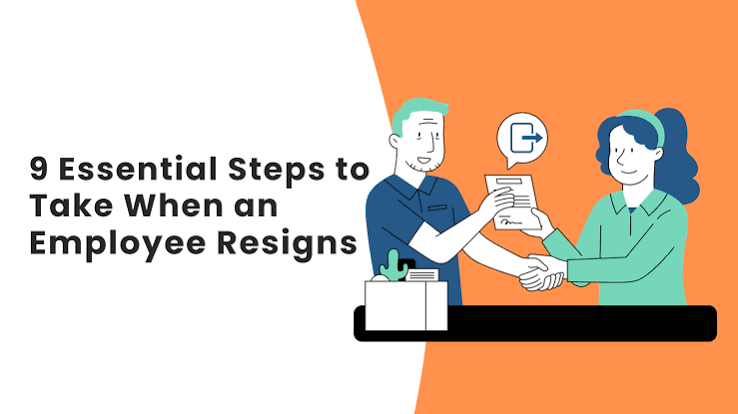
An employee resignation is more than an email saying, “I am resigning from my position.”
Once a resignation is received, HR needs to coordinate several activities to ensure the employee’s departure is properly managed.
The organisation may need to confirm the notice period, establish the last working day, plan the handover, update payroll, recover company assets, manage system access, conduct an exit interview and complete the final settlement.
If these activities are handled informally, important steps can easily be missed.
So, an employee resigned. What should HR do next?
Here is a practical step-by-step process.
1. Receive and Record the Resignation
The first step is to formally record the employee’s resignation.
HR should retain the resignation communication and record important details such as:
Employee name
Designation
Department
Resignation date
Reporting manager
Notice period
Proposed last working day
Reason for leaving, if provided
The resignation should be documented in the organization’s HR records or HRMS.
A clear record at the beginning makes the rest of the exit process easier to manage.
2. Review the Employment Terms
Before confirming the employee’s final date, HR should review the applicable employment terms and company policies.
Check areas such as:
Notice-period requirements
Leave during notice period
Early release process
Notice-period adjustment, where applicable
Handover requirements
Company asset policies
Exit documentation
The applicable terms can vary depending on the employee’s contract, company policy and relevant employment requirements.
HR should avoid making assumptions based on how previous resignations were handled.
3. Confirm the Last Working Day
Once the applicable notice period and any approved adjustments are reviewed, HR should establish the employee’s last working day.
The date should be communicated clearly to:
Employee
Reporting manager
Payroll team
Finance, where required
IT
Administration
Other relevant stakeholders
The last working day can affect salary calculation, attendance, benefits, system access and final settlement.
4. Acknowledge the Resignation
HR should formally acknowledge the resignation and communicate the next steps to the employee.
The communication can confirm:
Resignation received
Resignation status
Notice period
Last working day
Handover expectations
Exit formalities
Required documentation
Clear communication at this stage can prevent confusion later.
5. Create an Employee Exit Checklist
Once the resignation is confirmed, HR should create an exit checklist.
A basic checklist can include:
☐ Resignation recorded ☐ Last working day confirmed ☐ Notice period verified ☐ Handover planned ☐ Attendance and leave reviewed ☐ Payroll inputs checked ☐ Company assets identified ☐ IT access reviewed ☐ Exit interview scheduled ☐ Final settlement initiated ☐ Statutory/benefit formalities reviewed ☐ Exit documents prepared ☐ HRMS updated ☐ Employee file closed
A standard checklist ensures that the process does not depend entirely on someone’s memory.
6. Plan the Knowledge Handover
One of the most important responsibilities during the notice period is knowledge transfer.
The reporting manager and HR should identify what the employee needs to hand over.
This may include:
Current projects
Pending tasks
Client information
Important deadlines
Process documentation
Reports
Vendor information
Relevant files
Role-specific knowledge
For critical positions, the company may assign another employee to receive the handover.
The handover should be documented rather than treated as an informal conversation.
7. Review Attendance and Leave
Before final payroll processing, HR should review the employee’s attendance and leave records.
Check:
Attendance up to the last working day
Approved leave
Pending leave requests
Unpaid leave
Leave balance
Attendance corrections
Overtime, where applicable
The organization’s leave policy and applicable requirements should determine how any eligible leave balance is treated.
This information may also be required for the final settlement.
8. Inform Payroll and Finance
Payroll should be informed about the employee’s separation at the appropriate stage.
The payroll team may need to review:
Salary payable
Attendance
Leave-related amounts
Overtime
Incentives
Reimbursements
Salary advances
Loans
Other applicable deductions or payments
This helps ensure that the employee’s final payroll is based on accurate information.
9. Review Company Assets
HR should coordinate with the relevant departments to identify company property assigned to the employee.
This could include:
Laptop
Mobile phone
ID card
Access card
SIM card
Keys
Equipment
Documents
Other company assets
The asset-return process should be documented.
For IT equipment, the organization should also follow its approved process for data handling and device management.
10. Coordinate With IT About System Access
Employee exits should also trigger an IT and information-security review.
Depending on the employee’s role, this may involve:
Company email
HRMS
CRM
Cloud storage
Project management tools
Communication platforms
VPN
Internal applications
Administrative access
HR should coordinate with IT regarding when access should be modified or disabled.
Access management should follow the organization’s security procedures rather than being handled informally.
11. Schedule the Exit Interview
An exit interview can help HR understand the employee’s experience and identify areas that may need improvement.
HR may discuss:
Reason for leaving
Role experience
Manager relationship
Work environment
Career growth
Compensation and benefits
Training
Workplace policies
Suggestions for improvement
The objective is to collect useful feedback.
The information can be reviewed collectively over time to identify recurring themes across employee exits.
12. Start the Full and Final Settlement Process
The final settlement should be prepared using verified HR and payroll information.
Depending on the employee’s circumstances and applicable rules, this may include:
Salary payable
Eligible leave-related payments
Reimbursements
Incentives
Deductions
Advances
Loans
Other applicable amounts
The organization should maintain supporting records for the calculation.
The exact settlement components and applicable timelines can vary depending on the employment terms, company policy and relevant legal requirements.
13. Review Statutory and Benefit Formalities
HR should check whether any employee benefits or statutory processes need to be completed as part of the separation.
Depending on the employee and organization, this may involve:
Provident Fund
ESI
Professional Tax
Tax documentation
Gratuity, where applicable
Insurance or other benefits
The requirements can vary based on employee eligibility, location and applicable regulations.
HR should verify the current requirements rather than relying on an old exit checklist.
14. Prepare Exit Documents
Once the required exit formalities are completed, HR can prepare the relevant documents.
These may include:
Relieving letter
Experience letter
Full and final settlement statement
Salary-related records
Tax documents
Other applicable employment records
The exact documents provided should follow the organization’s process and applicable requirements.
HR should also ensure that names, dates, designation and employment periods are accurate before issuing documents.
15. Update the HRMS
Once the employee’s separation is completed, HR should update the employee’s status.
Important information can include:
Separation date
Last working day
Exit type
Department
Final settlement status
Asset clearance
Exit document status
Benefits/statutory processing status
Keeping the HRMS updated helps ensure that reports and employee records remain accurate.
16. Close and Archive the Employee File
The final step is to ensure that the employee’s records are properly maintained.
The exit file may contain relevant:
Resignation records
Acceptance/acknowledgement
Notice-period information
Handover records
Attendance and leave records
Asset clearance
Exit interview records
Payroll records
Final settlement documentation
Exit documents
Other required employment records
Access to employee records should be restricted to authorized personnel.
The organization should also follow its applicable document-retention and data-protection requirements.
Employee Resignation: Quick HR Workflow
A simple resignation workflow can look like this:
Resignation Received ↓ Review Employment Terms ↓ Confirm Last Working Day ↓ Plan Handover ↓ Review Attendance & Leave ↓ Coordinate Payroll & Finance ↓ Asset & IT Clearance ↓ Exit Interview ↓ Full & Final Settlement ↓ Exit Documents ↓ Update HRMS & Close Employee File
This gives HR a clear sequence to follow.
What If the Employee Wants an Early Release?
Sometimes an employee may request to leave before completing the normal notice period.
In that situation, HR should review:
Employment terms
Company policy
Manager approval
Business requirements
Handover status
Any applicable notice-period adjustment or recovery provisions
The final decision and documentation should be consistent with the organization’s applicable policies and requirements.
Most importantly, the revised last working day should be formally recorded.
What If the Employee Has Pending Work?
A resignation does not automatically mean that all responsibilities stop immediately.
The reporting manager should identify:
What is pending?
Who will take over?
What information needs to be transferred?
What deadlines are approaching?
Which clients or stakeholders need to be informed?
This is why the handover process should begin early during the notice period rather than waiting until the last day.
What If the Employee Has Company Assets or Outstanding Dues?
HR should coordinate with the relevant departments rather than trying to manage everything independently.
For example:
HR: Exit coordination Manager: Handover IT: System access and technology assets Finance: Outstanding amounts and settlement inputs Administration: Physical assets Payroll: Salary and final settlement
Clear ownership makes the exit process easier to track.
Why a Standard Resignation Process Matters
Without a standard process, employee exits can become dependent on individual HR team members.
One employee may receive complete documentation while another may have missing records.
A standardized process helps organizations:
Reduce missed tasks
Improve payroll accuracy
Protect company assets
Manage system access
Improve handovers
Maintain accurate employee records
Support compliance
Provide a consistent exit experience
For growing SMEs, this consistency becomes increasingly important.
How HRMS Can Simplify the Resignation Process
When employee exits are handled manually, HR may need to manage multiple spreadsheets, emails, checklists and follow-ups.
An HRMS can help bring many of these activities into a structured workflow.
For example:
Resignation → Approval → Notice Period → Handover → Clearance → Payroll → Settlement → Exit Documents
Depending on the system, HR can also use notifications, approvals and status tracking to identify pending tasks.
This is particularly useful when the organization manages a large number of employees.
Final Thoughts
When an employee resigns, HR’s job is not simply to accept the resignation.
The resignation should trigger a structured process covering notice period, last working day, handover, attendance, payroll, assets, system access, exit interview, settlement and documentation.
The exact process will vary between organizations, but the principle remains the same:
A resignation should start a process—not create a series of last-minute tasks.
For growing businesses, a clear employee exit workflow and a suitable HRMS can help HR manage resignations more consistently while keeping employee records, payroll and operational responsibilities organized.
SEO Keywords
Primary Keywords: Employee Resignation Process, HR Employee Exit Process, What HR Should Do After Resignation
Secondary Keywords: Employee Offboarding Process, Employee Exit Checklist, HR Resignation Checklist, Notice Period Process, Full and Final Settlement, Exit Interview, Employee Handover, HRMS Exit Process, Employee Separation Process