
By Afla KC , Digital Marketing Executive
Introduction
Employees’ State Insurance (ESI) is one of the most important social security schemes that HR and payroll teams need to understand. It provides eligible employees and their families with access to medical care and financial support during specific situations such as sickness, maternity, disablement, and employment-related injury.
For businesses, ESI compliance is more than simply deducting contributions from an employee’s salary. HR teams need to correctly identify eligible employees, understand wage limits, complete registration, calculate contributions, maintain records, and ensure timely compliance.
One of the most common questions HR professionals face is:
“When is an employee eligible for ESI benefits?”
The answer depends on several factors, including the type of establishment, employee status, applicable wage ceiling, and the employee’s contribution and benefit periods.
According to the Employees’ State Insurance Corporation (ESIC), employees drawing wages up to ₹21,000 per month are generally covered under the ESI scheme, while the wage ceiling for eligible persons with specified disabilities is ₹25,000 per month.
This guide explains the key ESI eligibility rules HR teams should understand and the practical steps businesses should follow to manage ESI correctly.
What Is ESI?
The Employees’ State Insurance Scheme is a social security programme administered by the Employees’ State Insurance Corporation.
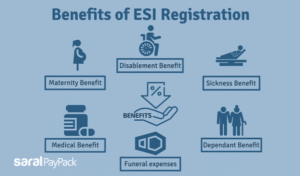
The scheme provides various forms of protection, including:
-
Medical benefits
-
Sickness benefits
-
Maternity benefits
-
Disablement benefits
-
Dependants’ benefits
-
Funeral expenses
-
Other prescribed benefits
The purpose of ESI is to provide financial and medical support to eligible employees during situations that can affect their ability to work or earn.
Who Is Covered Under ESI?
ESI applies to employees working in establishments covered by the ESI Act and applicable notifications.
The scheme traditionally applies to factories employing 10 or more persons, while coverage has also been extended to various establishments such as shops, hotels, restaurants, educational institutions, medical institutions, cinemas, and other establishments depending on the applicable government notification and threshold.
Therefore, HR teams should not determine eligibility based only on the employee’s salary.
They should first ask:
Is the establishment covered under ESI?
If the establishment is covered, the next step is determining whether the individual employee falls within the applicable coverage criteria.
What Is the ESI Wage Limit?
The current general wage ceiling for ESI coverage is:
₹21,000 per month
Employees whose wages fall within the prescribed ceiling are generally covered when they work in a covered establishment.
For eligible employees with specified disabilities, the wage ceiling is:
₹25,000 per month
These limits are prescribed under the ESI framework.
HR teams should remember that ESI wage calculation is not necessarily the same as simply looking at an employee’s basic salary.
The definition and treatment of wages for ESI purposes should be examined carefully when determining coverage.
What Happens If an Employee’s Salary Crosses ₹21,000?
This is one of the most important areas for payroll teams.
An employee who is already covered under ESI does not necessarily lose coverage immediately if their wages cross the prescribed ceiling during an ongoing contribution period.
The ESI rules provide for continuation of coverage until the end of the relevant contribution period when wages exceed the ceiling after the beginning of that period.
For HR teams, this means that a salary increment should not automatically result in immediate removal from ESI.
The payroll team should check:
-
When the salary increase became effective
-
The applicable contribution period
-
The employee’s wages for ESI purposes
-
Whether the employee was already covered at the beginning of the contribution period
This is an important area where payroll errors can occur.
Understanding ESI Contribution Periods
ESI operates through contribution and corresponding benefit periods.
The two contribution periods are generally:
1 April to 30 September
and
1 October to 31 March
The corresponding benefit periods follow the prescribed schedule. ESIC’s FAQ explains that the contribution year is divided into two six-month periods, with corresponding benefit periods beginning after the relevant contribution period.
Understanding these periods helps HR teams determine how employee coverage and benefits operate when wages or employment circumstances change.
Who Is Considered an Employee for ESI?
The ESI framework covers employees employed for wages in or in connection with the work of a covered factory or establishment.
This can include employees who are:
-
Directly employed by the principal employer
-
Working in different departments of the establishment
-
Performing administrative work
-
Working in sales or distribution
-
Employed through an immediate employer in applicable circumstances
-
Certain paid directors who meet the applicable conditions
ESIC guidance specifically recognises certain paid directors as employees for ESI purposes when the applicable conditions are satisfied.
However, not every person working with a business automatically qualifies as an ESI-covered employee.
Are Apprentices Covered Under ESI?
An apprentice engaged under the Apprentices Act, 1961 is listed among the exclusions in ESIC’s FAQ regarding employees covered under the scheme.
HR teams should therefore carefully distinguish between:
-
Employees
-
Apprentices
-
Consultants
-
Contractors
-
Other categories of workers
Employment classification can have a direct impact on statutory compliance.
What Benefits Does an Eligible Employee Receive?
ESI is not simply a payroll deduction.
It provides social security protection to eligible insured employees and their families.
Major benefits include:
Medical Benefits
Eligible insured persons and their families can receive medical care through the ESI system subject to applicable rules.
Sickness Benefits
Financial support may be available during qualifying periods of sickness.
Maternity Benefits
Eligible insured women can receive maternity-related benefits according to the applicable provisions.
Disablement Benefits
Employees affected by employment-related disablement may receive benefits under the ESI framework.
Dependants’ Benefits
In certain cases involving employment-related death, dependants may receive prescribed benefits.
Funeral Expenses
The scheme also provides for funeral expenses subject to applicable provisions.
The exact eligibility conditions, duration, and benefit amount vary depending on the specific benefit.
What Should HR Do When Hiring a New Employee?
When a new employee joins a covered establishment, HR should include ESI verification as part of the onboarding process.
A practical checklist includes:
Step 1: Check the Establishment
Confirm that the organisation is covered under ESI.
Step 2: Check Employee Eligibility
Review the employee’s applicable wages and employment status.
Step 3: Collect Required Information
Obtain the necessary employee details and documents required for registration.
Step 4: Register the Employee
Complete the applicable ESIC registration process.
Step 5: Verify the Insurance Number
Ensure the employee’s insurance details are correctly recorded.
Step 6: Configure Payroll
Make sure the employee’s ESI contribution is correctly calculated and reflected in payroll.
Step 7: Maintain Records
Keep appropriate records of contributions, employee details, wage changes, and other statutory information.
What Are the ESI Contribution Rates?
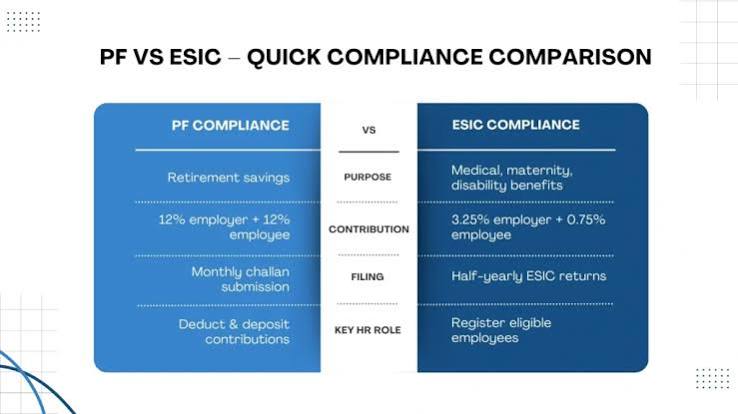
Under the current ESI framework, the employee contribution is 0.75% of wages, while the employer contribution is 3.25% of wages.
For example, if an employee’s applicable ESI wages are ₹20,000:
Employee contribution: ₹20,000 × 0.75% = ₹150
Employer contribution: ₹20,000 × 3.25% = ₹650
Therefore, the total contribution would be ₹800 for that wage period.
Payroll teams should always verify the applicable contribution rules and current statutory requirements before processing payroll.
What HR Teams Should Monitor Every Month
ESI compliance should be treated as an ongoing payroll responsibility rather than a one-time registration task.
HR and payroll teams should regularly monitor:
-
New employee registrations
-
Employee exits
-
Salary revisions
-
Employees crossing the wage ceiling
-
Contribution calculations
-
Challan/payment compliance
-
Employee insurance details
-
Contribution periods
-
Required statutory records
A monthly compliance checklist can significantly reduce errors.
Common ESI Compliance Mistakes
Businesses often face problems because of simple administrative mistakes.
Common issues include:
Incorrect Wage Calculation
Using only basic salary without properly assessing the applicable definition of wages can result in incorrect coverage decisions.
Delayed Registration
Failing to register eligible employees on time can create compliance issues.
Incorrect Salary Updates
Payroll teams may fail to update ESI calculations after salary revisions.
Immediate Removal After Salary Increase
An employee may continue under ESI until the end of the relevant contribution period when the wage ceiling is crossed after the contribution period has begun.
Poor Record Management
Missing employee information, contribution records, or wage details can make compliance difficult to verify.
ESI vs Employee Health Insurance
HR teams should also understand that statutory ESI and private health insurance are not necessarily interchangeable.
ESI is a statutory social security scheme applicable to eligible employees in covered establishments.
Private health insurance, on the other hand, is an employer-provided or individually purchased insurance arrangement.
Depending on the circumstances, businesses may provide additional private health insurance benefits, but HR teams should not assume that private insurance automatically replaces statutory ESI obligations.
How Payroll Software Can Simplify ESI Compliance
Managing ESI man ually can
become difficult as an organisation grows.
Payroll software can help HR te
ams:
-
Track employee eligibility
-
Calculate contributions
-
Manage salary changes
-
Maintain employee records
-
Generate payroll reports
-
Reduce calculation errors
-
Maintain compliance documentation
Automation is particul
arly useful for organisations managing a large workforce or multiple salary structures.
However, software
should support—no
t replace—proper statutory review.
ESI Compliance Checklist for HR Teams
Use this simple checklist:
✓ Confirm establishment coverage
✓ Check employee eligibility
✓ Verify applicable wage ceiling
✓ Collect employee details
✓ Complete registration
✓ Calculate employee contribution
✓ Calculate employer contribution
✓ Monitor salary revisions
✓ Track contribution periods
✓ Process payments on time
✓ Maintain statutory records
✓ Review compliance regularly
This checklist can help HR teams create a more structured ESI management process.
Final Thoughts
Understanding ESI eligibility is an essential responsibility for modern HR and payroll teams. The process involves more than checking whether an employee earns below ₹21,000 per month. HR professionals must consider the establishment’s coverage, employee classification, applicable wage rules, contribution periods, salary changes, and statutory requirements.
For covered establishments, eligible employees receive valuable social security protection through medical and cash benefits provided under the ESI framework. For employers, accurate registration, payroll calculation, contribution management, and record-keeping are essential parts of statutory compliance.
The best approach is to build ESI checks directly into the employee lifecycle—from onboarding and payroll processing to salary revisions and exit formalities. Regular compliance reviews and reliable payroll systems can help HR teams minimise errors and maintain accurate statutory records.
As businesses continue to adopt more structured HR and payroll systems, understanding statutory requirements such as ESI becomes increasingly important. A well-managed ESI process protects employees, supports compliance, and contributes to a more organised and responsible workplace.
Note: ESI rules, thresholds, contribution requirements, and applicable establishment coverage can change through legislation, notifications, or government orders. HR teams should verify the latest requirements with ESIC or a qualified compliance professional before making statutory decisions.