
By , Afla KC , Digital Marketing Executive
Introduction
HR management is not limited to recruitment, employee engagement, attendance, and payroll. One of the most important responsibilities of an HR team is maintaining accurate statutory registers and employment records.
Statutory registers are official records that
businesses are required to maintain under applicable labour laws and regulations. These records help organisations demonstrate that they are complying with requirements related to wages, working hours, attendance, leave, employee benefits, employment conditions, and other statutory obligations.
For many businesses, maintaining these records can become challenging. Different labour laws may apply depending on factors such as th
e nature of the establishment, number of employees, location, industry, and applicable state rules. Poor record management can result in compliance gaps, difficulty during inspections, and unnecessary administrative work.
A structured statutory record-keeping system allows HR teams to stay organised, respond to audits more efficiently, and maintain transparency in employment practices.
In this guide, we will look at the
key statutory registers and records HR teams may need to maintain, why they are important, common compliance mistakes, and how businesses can simplify statutory record management.
What Are Statutory Registers?
Statutory registers are records that an employer is required to maintain under applicable labour and employment laws.
They may contai
n information about:
-
Employees
-
Wages
-
Attendance
-
Working hours
-
Leave
-
Overtime
-
Deductions
-
Advances
-
Benefits
-
Employment details
-
Statutory contributions
These records provide documented evidence of how an organisation manages its workforce and fulfils its legal obligations.
The exact registers required can vary depending on the applicable central and state legislation.
Why Are Statutory Records Important?
Maintaining statutory records is important for several reasons.
1. Legal Compliance
Accurate records help demonstrate that the organisation is following applicable labour laws.
2. Audit and Inspection Readiness
Government auth
orities may require employers to produce specific records during inspections or audits.
3. Payroll Accuracy
Wage and attendance records support accurate salary calculations.
4. Employee Transparency
Proper documentation helps employees understand their wages, leave, deductions, and employment-related information.
5. Internal HR Management
Well-maintain
ed records make it easier for HR teams to manage employee information and resolve disputes.
1. Employee Master Records
An employee master record is one

of the most important HR records.
It generally contains relevant information such as:
-
Employee name
-
Employee identification details
-
Date of joining
-
Designation
-
Department
-
Employment category
-
Salary details
-
Contact information
-
Statutory identification details
-
Date of exit, where applicable
HR teams should ensure that employee information is updated whenever there is a change.
2. Attendance and Muster Records
Attendance records help organisations track employee presence and working patterns.
Depending on applicable requirements, records may include:
-
Date
-
Employee details
-
Attendance status
-
Working hours
-
Weekly offs
-
Holidays
-
Absence
-
Shift details
Attendance data can also support payroll calculations and overtime management.
Digital attendance systems can make this process easier while reducing manual errors.
3. Wage and Salary Registers
Wage records are particularly important for statutory compliance.
Depending on the applicable law, wage records may contain:
-
Employee details
-
Wage period
-
Basic wages
-
Allowances
-
Overtime
-
Gross wages
-
Deductions
-
Net wages
-
Payment details
Payroll records should be consistent with salary structures and applicable statutory requirements.
4. Overtime Records
If employees work beyond prescribed working hours and are eligible for overtime, appropriate records should be maintained.
These may include:
-
Employee name
-
Date of overtime
-
Number of overtime hours
-
Applicable overtime rate
-
Overtime amount
-
Payment details
HR teams should ensure that overtime is calculated according to the applicable legislation and establishment-specific rules.
5. Leave Records
Leave records help HR teams track employee leave entitlements and utilisation.
Depending on applicable rules, organisations may need to maintain information about:
-
Earned leave
-
Casual leave
-
Sick leave
-
Maternity leave
-
Other statutory leave
-
Leave balance
-
Leave taken
A digital leave management system can make tracking significantly easier.
6. Minimum Wage Records
Businesses must ensure that employees receive wages in accordance with applicable minimum wage requirements.
HR and payroll teams should maintain records that allow them to verify:
-
Applicable wage rates
-
Employee category
-
Basic wages
-
Allowances
-
Working days
-
Overtime
-
Total wages
Minimum wage requirements may differ based on the applicable state, scheduled employment, skill category, and other factors.
7. Statutory Deduction Records
Salary deductions should be properly recorded.
Depending on the employee and establishment, records may relate to:
-
Provident Fund
-
ESI
-
Professional Tax
-
TDS
-
Labour welfare-related deductions
-
Other legally permitted deductions
Each deduction should be accurately reflected in payroll records.
8. Provident Fund Records
For establishments covered under EPF requirements, HR and payroll teams need to maintain appropriate employee and contribution records.
These may include:
-
Employee PF details
-
UAN information
-
Employee contributions
-
Employer contributions
-
Wage details
-
Monthly contribution records
-
Challan/payment records
Accurate PF records are essential for both employee benefits and employer compliance.
9. ESI Records
For establishments and employees covered under ESI, relevant records may include:
-
Employee insurance details
-
ESI contribution information
-
Applicable wages
-
Employee contribution
-
Employer contribution
-
Payment records
HR teams should regularly review employee eligibility and update records when salary or employment details change.
10. Bonus Records
Where applicable, organisations should maintain records relating to statutory bonus calculations and payments.
Records may include:
-
Employee eligibility
-
Wage details
-
Bonus calculation
-
Amount paid
-
Payment date
Proper documentation helps HR teams demonstrate that applicable statutory bonus requirements have been addressed.
11. Maternity Benefit Records
Where applicable, employers should maintain appropriate records relating to maternity benefits.
These may include:
-
Employee details
-
Leave applications
-
Leave duration
-
Relevant supporting documents
-
Benefit payments
-
Return-to-work details
HR teams should handle maternity-related information carefully and maintain appropriate confidentiality.
12. Registers Related to Employee Deductions
Certain deductions from employee wages may be permitted only under applicable legal provisions.
HR teams should maintain appropriate records of:
-
Nature of deduction
-
Amount
-
Date
-
Reason
-
Supporting documentation
Unauthorised or incorrectly documented deductions can create compliance issues and employee disputes.
13. Employment and Appointment Records
Employee appointment documentation should be maintained systematically.
Important records may include:
-
Offer letters
-
Appointment letters
-
Employment agreements
-
Job descriptions
-
Salary revisions
-
Promotion letters
-
Transfer records
-
Resignation letters
-
Experience certificates
-
Full and final settlement records
These documents provide an important employment history for each employee.
14. Registers Related to Working Conditions
Depending on the establishment and applicable law, organisations may need records related to:
-
Working hours
-
Shifts
-
Weekly holidays
-
Rest intervals
-
Holidays
-
Overtime
-
Employee welfare facilities
These records help demonstrate that working conditions comply with applicable requirements.
15. Records Under Workplace Safety and Other Laws
Certain industries may have additional documentation requirements relating to:
-
Workplace safety
-
Accidents
-
Health and safety training
-
Protective equipment
-
Hazard management
-
Employee welfare
Factories, construction businesses, manufacturing units, and other higher-risk workplaces may have more extensive requirements than standard office environments.
Central Laws vs State-Specific Requirements
One of the biggest challenges for HR teams is understanding that statutory requirements are not always identical across India.
The records required may depend on:
-
State
-
Industry
-
Establishment type
-
Number of employees
-
Applicable labour legislation
-
Government notifications
For example, a company operating in multiple states may need to maintain different records or follow different procedural requirements depending on the applicable local rules.
Therefore, HR teams should avoid using a single generic compliance checklist for every business.
Digital vs Physical Statutory Records
Modern HR departments increasingly use digital systems to maintain statutory records.
Digital records can provide advantages such as:
-
Faster access
-
Better organisation
-
Automated calculations
-
Reduced paperwork
-
Easier reporting
-
Improved data accuracy
-
Secure backups
However, HR teams should confirm whether a particular record is permitted to be maintained electronically and whether specific formats, authentication, retention, or accessibility requirements apply.
How Long Should HR Records Be Maintained?
There is no single universal retention period for every HR record.
The required retention period can vary depending on:
-
Applicable legislation
-
Type of register
-
Nature of document
-
State-specific requirements
-
Tax requirements
-
Employment disputes
-
Company policies
HR teams should establish a documented record-retention policy based on the laws applicable to their organisation.
When in doubt, businesses should consult qualified labour-law or compliance professionals.
Common Statutory Compliance Mistakes
HR teams should watch out for common issues such as:
Incomplete Employee Records
Missing information can make compliance reporting difficult.
Inconsistent Payroll Data
Employee salary records, attendance, and statutory records should be aligned.
Delayed Updates
Salary changes, promotions, transfers, and exits should be updated promptly.
Missing Supporting Documents
Statutory claims should have appropriate documentation wherever required.
Using Outdated Formats
Organisations should ensure that their registers and processes reflect applicable current requirements.
Poor Record Security
Employee records contain confidential information and should be protected from unauthorised access.
How HR Teams Can Simplify Statutory Compliance
A structured approach can make statutory record management easier.
Step 1: Identify Applicable Laws
Determine which labour laws and statutory requirements apply to your organisation.
Step 2: Create a Compliance Checklist
List all required registers, records, filings, and deadlines.
Step 3: Assign Responsibility
Clearly identify who is responsible for maintaining each record.
Step 4: Digitise Where Appropriate
Use HRMS and payroll software to automate routine data collection.
Step 5: Conduct Regular Audits
Review records periodically to identify missing or inconsistent information.
Step 6: Maintain Backups
Ensure important records are securely backed up.
Step 7: Monitor Regulatory Changes
Labour laws and compliance requirements can change, so HR teams should regularly review updates.
The Role of HRMS in Statutory Record Management
An HRMS can bring employee information, attendance, payroll, leave, and statutory records into one system.
It can help businesses:
-
Maintain employee databases
-
Track attendance
-
Manage leave
-
Process payroll
-
Calculate statutory contributions
-
Generate reports
-
Store documents
-
Track compliance activities
Automation reduces repetitive administrative work and gives HR teams better visibility into compliance.
However, software configuration should be reviewed whenever applicable statutory requirements change.
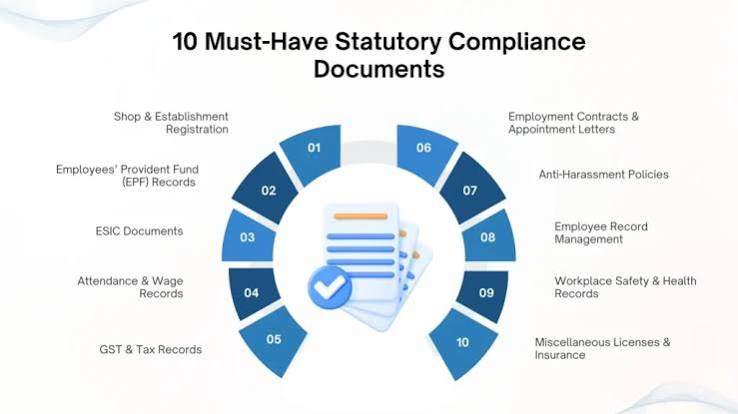
Statutory Records Checklist for HR Teams
A practical HR checklist may include:
✓ Employee master records
✓ Attendance and muster records
✓ Wage and salary records
✓ Overtime records
✓ Leave records
✓ Minimum wage-related records
✓ PF records
✓ ESI records
✓ Professional Tax records, where applicable
✓ TDS and payroll tax records
✓ Bonus records, where applicable
✓ Maternity benefit records, where applicable
✓ Appointment and employment records
✓ Working-hours records
✓ Accident and safety records, where applicable
✓ Statutory payment records
✓ Required returns and filings
The exact list should always be customised based on the organisation’s location, industry, workforce, and applicable legislation.
Conclusion
Statutory registers and records are an essential part of effective HR management. They provide organisations with documented evidence of compliance while supporting accurate payroll, employee administration, audits, inspections, and workplace management.
For HR teams, the key challenge is not simply maintaining a large number of documents. It is identifying which requirements apply to the organisation and ensuring that records remain accurate, complete, updated, secure, and accessible.
Businesses should regularly review their statutory compliance requirements, maintain a centralised checklist, establish clear responsibilities, and use appropriate HR and payroll technology to reduce manual work.
A proactive approach to statutory record management can help organisations identify compliance gaps before they become serious problems. More importantly, it creates a structured HR environment where employee information, payroll records, statutory contributions, and employment documentation can be managed efficiently.
In a changing regulatory environment, HR teams should treat statutory compliance as an ongoing process rather than a once-a-year activity. Regular audits, updated policies, reliable documentation, and professional compliance support can help businesses maintain stronger and more organised HR operations.
Important note: The exact statutory registers, formats, retention periods, and filing requirements applicable to an organisation depend on the relevant central and state laws, establishment type, industry, workforce size, and applicable notifications. HR teams should verify current requirements before relying on a generic checklist.