
By Afla KC , Digital Marketing Executive
Introduction
Work from home has become an important part of modern workplace management. For many organisations, remote work is no longer simply a temporary arrangement. It has become a practical way to offer flexibility, attract talent, improve employee satisfaction, and maintain business continuity.
However, allowing employees to work fro
m home without clear guidelines can create challenges.
Questions can quickly arise:
-
When can employees work from
-
home?
-
Who is eligible?
-
What are the expected working hours?
-
How should attendance be recorded?
-
How should employees
-
communicate with their teams?
-
Who provides laptops and other equipment?
-
How is employee performance measured?
-
What happens if an em
-
ployee is unavailable during working hours?
A well-designed Work From Home (WFH) Policy provides clarity for both employers and employees. It establishes expectations while giving employees the flexibility to work effectively outside the traditional office environment.
A good policy should not simply say that employees are “allowed to work from home.” It should clearly explain how remote work will operate in practice.
This guide covers the key areas employers should define when creating a work-from-home policy.
What Is a Work From Home Policy?
A Work From Home Policy is a formal company guideline that explains when and how employees may perform their duties remotely.
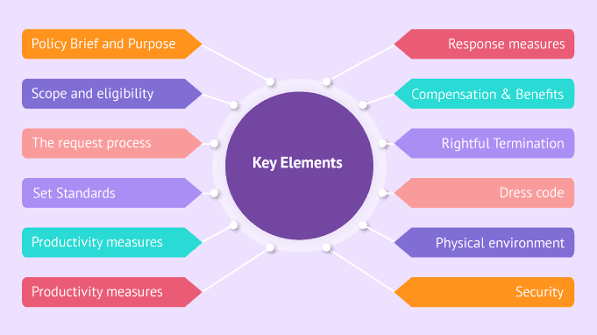
It establishes expectations around:
-
Eligibility
-
Working hours
-
Attendance
-
Communication
-
Productivity
-
Performance
-
Technology
-
Data security
-
Expenses
-
Leave
-
Availability
-
Health and safety
-
Policy violations
The purpose is to create a structured remote-working environment rather than leaving expectations open to interpretation.
1. Clearly Define Who Is Eligible
Not every role can necessarily be performed remotely.
Employers should clearly identify which employees or job roles are eligible for work from home.
Eligibility may depend on:
-
Nature of the job
-
Department
-
Employee responsibilities
-
Business requirements
-
Performance
-
Seniority, where applicable
-
Availability of necessary technology
For example, a software developer may be able to work remotely, while a production-floor employee may need to be physically present.
The policy should explain whether WFH is:
-
Available to all eligible employees
-
Available only to selected roles
-
Subject to manager approval
-
Available only in specific circumstances
Clear eligibility criteria can prevent confusion and perceptions of unfair treatment.
2. Define When Work From Home Is Allowed
Employers should specify whether remote work is:
Fully Remote
Employees work from home on a permanent basis.
Hybrid
Employees divide their working time between the office and home.
Occasional WFH
Employees can request remote work for specific days or situations.
Emergency WFH
Employees may work remotely during exceptional circumstances such as severe weather, transportation disruptions, or other emergencies.
The policy should clearly explain which model the organisation follows.
3. Establish Working Hours
Remote work does not mean that working hours become undefined.
Employers should clearly mention:
-
Standard working hours
-
Start and end times
-
Lunch or break periods
-
Core availability hours
-
Shift timings, where applicable
-
Overtime requirements
-
Time-zone expectations for distributed teams
For example, a company may require employees to be available between specific core hours while allowing some flexibility around their start and finish times.
The important point is to create clarity without unnecessarily micromanaging employees.
4. Define Attendance Requirements
Attendance tracking should be clearly addressed.
Employees should know:
-
How attendance is marked
-
Whether login/logout is required
-
How breaks are recorded
-
What happens if there is a technical issue
-
How late attendance is handled
-
How WFH days are recorded
If the organisation uses HRMS or attendance software, the policy should explain the expected process.
A consistent attendance system can also help payroll teams maintain accurate salary and leave records.
5. Explain the WFH Approval Process
Employees should know how to request work from home.
The policy may specify:
-
Who approves WFH
-
How many days can be requested
-
How much advance notice is required
-
Emergency request procedures
-
Documentation requirements, where applicable
For example:
Employee → Reporting Manager → HR, where required
A clearly defined approval workflow prevents informal arrangements from creating administrative problems.
6. Set Communication Expectations
Communication is one of the biggest challenges in remote work.
Employees should know which communication channels are used for different purposes.
For example:
-
Email for formal communication
-
Instant messaging for quick updates
-
Video calls for meetings
-
Project management tools for task tracking
-
HRMS for attendance and leave
The policy can also establish expectations around response times.
For example, employees may be expected to respond to work-related communication during agreed working hours.
7. Define Meeting and Collaboration Rules
Remote employees need to remain connected with their teams.
Employers can establish guidelines around:
-
Online meetings
-
Team calls
-
Camera usage
-
Meeting punctuality
-
Calendar availability
-
Meeting etiquette
-
Internal collaboration
However, organisations should avoid unnecessary meetings.
Remote work is more effective when employees have enough uninterrupted time to complete their actual responsibilities.
8. Set Clear Performance Expectations
One of the biggest misconceptions about remote work is that productivity should be measured by how long an employee appears online.
Instead, organisations should focus on:
-
Deliverables
-
Deadlines
-
Quality of work
-
Goals
-
Customer outcomes
-
Team contribution
Managers should establish measurable performance expectations.
This helps employees understand what they are accountable for while giving them reasonable flexibility in how they complete their work.
9. Define Technology and Equipment Responsibilities
Employers should clearly state who provides the equipment required for remote work.
This may include:
-
Laptop
-
Monitor
-
Keyboard and mouse
-
Headset
-
Internet connection
-
Required software
-
Security tools
The policy should clarify:
-
Who owns company equipment
-
How equipment is maintained
-
What happens if equipment is damaged
-
Whether employees can use personal devices
-
What happens when employment ends
Clear equipment guidelines can prevent disputes later.
10. Address Data Security and Confidentiality
Remote employees may access sensitive company information outside the office.
Therefore, data security should be a major part of any WFH policy.
Employees should be instructed to:
-
Use approved devices
-
Protect passwords
-
Avoid sharing company credentials
-
Use authorised software
-
Secure confidential documents
-
Avoid accessing sensitive information through unsafe networks
-
Report suspected security incidents
Where applicable, organisations should also use tools such as multi-factor authentication, device management, VPNs, and access controls.
The policy should make it clear that company data remains confidential regardless of where the employee works.
11. Explain Internet and Other Work Expenses
Employers should clarify whether they provide or reimburse expenses related to remote work.
Possible expenses include:
-
Internet
-
Mobile communication
-
Electricity
-
Equipment
-
Software subscriptions
-
Other approved work-related costs
If reimbursement is available, the policy should specify:
-
Eligible expenses
-
Maximum limits
-
Required documents
-
Approval process
-
Reimbursement timelines
Avoid vague statements such as “reasonable expenses will be reimbursed” without defining what reasonable means.
12. Include Leave and Absence Rules
Employees working remotely should follow the same applicable leave procedures unless the organisation specifically provides otherwise.
The policy should explain:
-
How leave is requested
-
Who approves leave
-
How emergency leave is communicated
-
How sick leave is reported
-
What happens when an employee becomes unavailable during working hours
Working from home should not be treated as a substitute for applying for leave when an employee is unable to work.
13. Define Health and Safety Expectations
Employers should encourage employees to maintain a safe and suitable home-working environment.
Employees can be advised to:
-
Use an appropriate workstation
-
Maintain good posture
-
Take regular breaks
-
Avoid unsafe work setups
-
Report work-related incidents where required
Depending on the organisation and applicable legal requirements, employers may also consider providing ergonomic guidance or support.
14. Define Geographic Restrictions
Employers should clarify whether employees can work from any location or only from an approved residence.
This is particularly important when employees want to work:
-
From another city
-
From another state
-
From another country
Working from another location can potentially affect taxation, employment compliance, data security, insurance, and other business considerations.
Therefore, employees should obtain approval before changing their regular remote-working location where the policy requires it.
15. Address Employee Privacy
Remote work can create concerns about employee monitoring.
If an organisation uses monitoring software, attendance tracking, device management, or other technology, employees should be informed about:
-
What is monitored
-
Why it is monitored
-
How information is used
-
Who can access it
-
How long relevant information is retained
Employers should aim for transparency and ensure that monitoring practices are consistent with applicable laws and company policies.
16. Define Policy Violations
Employees should understand what happens when WFH rules are repeatedly violated.
Examples may include:
-
Unauthorised absence
-
Misuse of company equipment
-
Sharing confidential information
-
Repeated failure to attend required meetings
-
Misrepresentation of attendance
-
Failure to meet agreed responsibilities
The policy should explain that violations may result in appropriate action under the organisation’s disciplinary procedures.
17. Include Business Continuity Provisions
Remote work policies can also support business continuity.
Employers should explain what happens when:
-
The office becomes unavailable
-
There is a local emergency
-
Employees cannot travel
-
Critical systems are disrupted
-
Certain teams need to operate remotely
Having a predefined process allows organisations to respond faster during unexpected situations.
18. Review the Policy Regularly
A WFH policy should not be treated as a document that is created once and forgotten.
Businesses should review it periodically based on:
-
Changes in workforce structure
-
Technology
-
Employee feedback
-
Business requirements
-
Changes in applicable laws
-
Security requirements
HR teams can also use employee feedback to identify areas where the policy needs improvement.
Common Work From Home Policy Mistakes
Employers should avoid:
Being Too Vague
Statements such as “employees can work remotely when required” create confusion.
Treating Every Role the Same
Different roles may have different operational requirements.
Focusing Only on Attendance
Productivity should not be measured purely by online presence.
Ignoring Data Security
Remote access increases the importance of cybersecurity controls.
Failing to Define Equipment Responsibility
Employees and employers may have different expectations about who pays for equipment and expenses.
Not Defining Approval Procedures
Informal WFH arrangements can create attendance and payroll problems.
Not Communicating the Policy
Even the best policy is ineffective if employees do not understand it.
A Simple Work From Home Policy Checklist
Before implementing a WFH policy, HR teams should confirm that it addresses:
✓ Eligibility
✓ Remote work model
✓ Working hours
✓ Attendance
✓ WFH approval process
✓ Communication
✓ Meetings
✓ Performance expectations
✓ Equipment
✓ Internet and expenses
✓ Data security
✓ Confidentiality
✓ Leave and absence
✓ Health and safety
✓ Geographic restrictions
✓ Employee privacy
✓ Policy violations
✓ Business continuity
✓ Policy review
Conclusion
A successful Work From Home policy is not simply about giving employees permission to work outside the office. It is about creating a clear framework that balances flexibility with accountability.
Employees should understand when they can work remotely, what is expected from them, how they should communicate, how performance will be evaluated, and what responsibilities they have while working from home.
Employers, meanwhile, need clarity around attendance, productivity, equipment, expenses, data security, employee privacy, and compliance.
The most effective WFH policies are clear, practical, flexible, and aligned with the organisation’s actual working environment. They should provide enough structure to maintain productivity and accountability without creating unnecessary restrictions.
As businesses continue to adopt hybrid and remote working models, HR teams should regularly review their policies and ensure that they reflect current business needs and applicable legal requirements.
Ultimately, a well-designed Work From Home policy benefits both sides. Employees gain clarity and flexibility, while employers gain a more structured approach to managing remote teams.
A good WFH policy doesn’t just define where employees work—it defines how people can work effectively, responsibly, and consistently.