
By Nandana G.S , Digital Marketing Executive
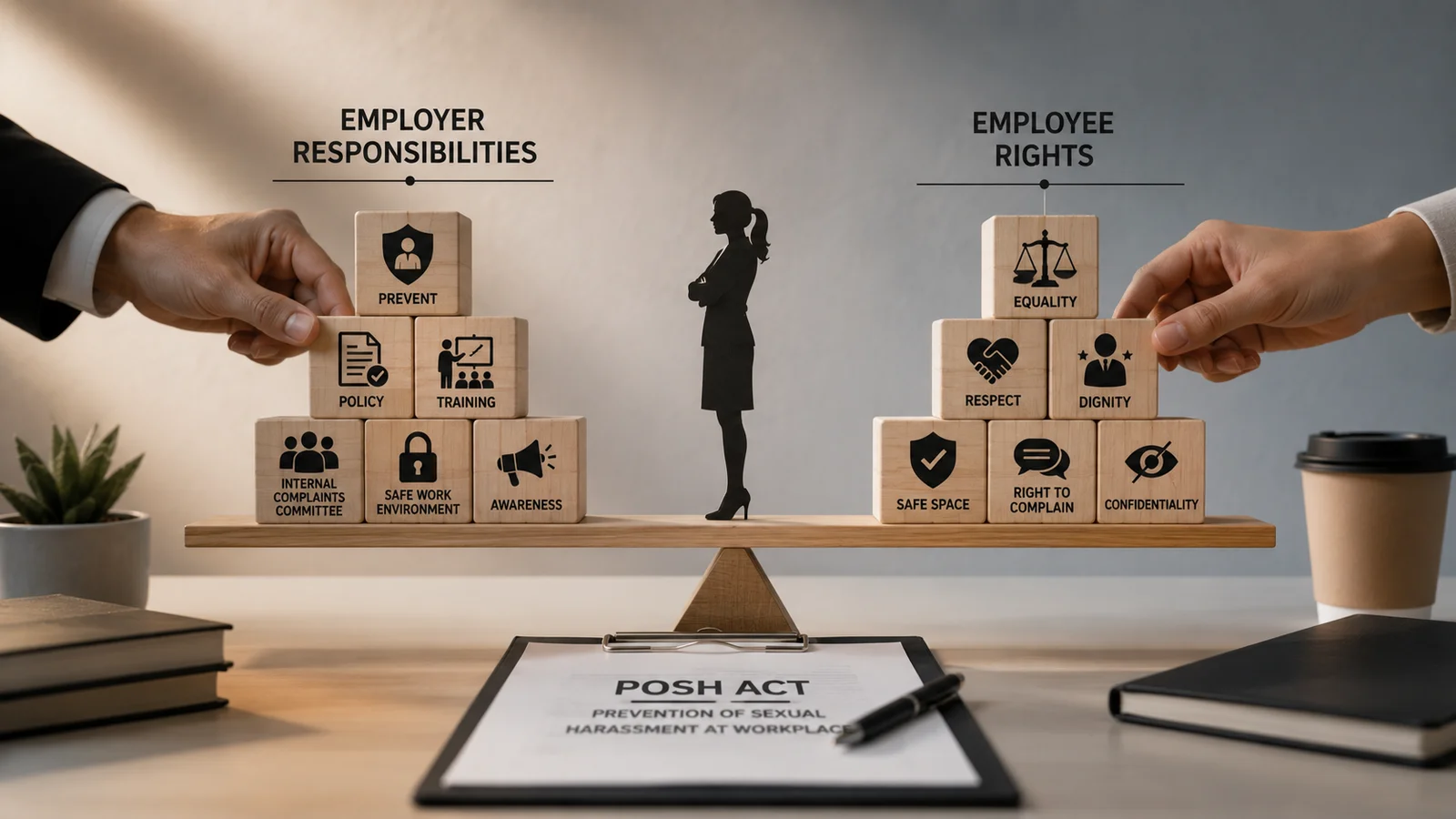
A strong POSH (Prevention of Sexual Harassment) Policy is more than a document kept in the HR folder. It is an important workplace framework that helps organizations prevent sexual harassment, establish a clear complaint mechanism, and ensure that employees understand their rights and responsibilities.
Under India’s Sexual Harassment of Women at Workplace (Prevention, Prohibition and Redressal) Act, 2013, employers have specific responsibilities regarding prevention, awareness, complaint handling, and workplace compliance.
What Should a POSH Policy Include?
A well-drafted POSH Policy should clearly address the following:
1. Purpose and Scope
The policy should explain why it exists and who it applies to. It should cover employees and, where relevant, interns, trainees, consultants, contract workers, visitors, and other individuals interacting with the workplace.
2. Clear Definition of Sexual Harassment
The policy should explain what constitutes sexual harassment and provide examples of prohibited conduct.
These may include:
-
Unwelcome physical contact or advances
-
Requests or demands for sexual favours
-
Sexually coloured remarks
-
Showing or sharing sexually explicit material
-
Other unwelcome physical, verbal, or non-verbal conduct of a sexual nature
3. Internal Committee Details
Where applicable, the organization should constitute an Internal Committee (IC) as required by law.
The policy should clearly communicate:
✔️ Committee composition ✔️ Roles and responsibilities ✔️ Contact details of committee members ✔️ Complaint-handling responsibilities ✔️ Procedures for dealing with complaints
4. Complaint Procedure
Employees should know how and where to submit a complaint.
The policy should explain the complaint process, applicable timelines, confidentiality expectations, and the general stages involved in inquiry and resolution.
5. Confidentiality
POSH matters involve sensitive information. The policy should emphasize appropriate confidentiality throughout the complaint and inquiry process and restrict disclosure to those who are legally or legitimately required to know.
6. Protection Against Retaliation
Employees should be able to raise genuine concerns without fear of retaliation or victimization. The policy should clearly state the organization’s commitment to maintaining a safe reporting environment.
7. Awareness and Training
A policy is effective only when employees know it exists.
Employers should conduct appropriate POSH awareness programs and training, particularly for employees and Internal Committee members.
8. Records and Documentation
HR teams should maintain relevant documentation, including:
-
POSH policy and updates
-
Internal Committee constitution records
-
Training and awareness records
-
Complaint and inquiry documentation
-
Annual reporting records, where applicable
-
Other statutory records and communications
POSH Compliance Is an Ongoing Responsibility
Simply creating a POSH policy does not mean an organization is fully compliant.
Businesses should regularly review whether their policy is current, whether the Internal Committee is properly constituted, whether employees have received awareness training, and whether required records and reporting processes are being maintained.
For growing organizations, POSH compliance should be treated as part of the overall HR compliance framework—not as a one-time documentation exercise.
Common POSH Compliance Gaps
Organizations may face challenges when they:
❌ Have an outdated POSH policy ❌ Fail to communicate the policy to employees ❌ Do not properly maintain Internal Committee records ❌ Skip mandatory awareness initiatives ❌ Lack a clearly communicated complaint mechanism ❌ Maintain incomplete documentation ❌ Treat POSH compliance as only an HR formality
How Level Up HR Solutions Can Help
At Level Up HR Solutions, we help businesses strengthen their HR compliance framework through HR policy documentation, statutory compliance support, HR audits, payroll compliance, and proper employee documentation.
A well-maintained POSH framework can help organizations build a workplace where employees feel safe, respected, informed, and protected.
Final Thoughts
POSH compliance is not simply about having a policy on paper. It is about creating a workplace system that prevents harassment, enables responsible reporting, protects confidentiality, and supports fair resolution.
For employers, regular review, employee awareness, proper documentation, and effective implementation are key to maintaining a compliant and responsible workplace.
Note: POSH requirements can depend on the organization’s circumstances and current legal requirements. Employers should verify the latest statutory provisions and applicable rules when drafting or updating their policy.
Level Up HR Solutions 📞 +91 8714805999 📧 info@leveluphrs.com 🌐 www.leveluphrs.com
#POSH #POSHCompliance #HRCompliance #WorkplaceSafety #SexualHarassmentPrevention #HRIndia #EmployeeRights #HRPolicy #StatutoryCompliance #WorkplaceCulture #KeralaBusiness #KochiBusiness #LevelUpHRSolutions