
26May

How HR Drives Real Employee Engagement

By, Nandana GS , Digital Marketing Executive , Levelup HR Solutions

Employee engagement is often discussed, but rarely built with intention. While initiatives such as team events and rewards programs are commonly implemented, sustainable engagement is achieved only when it is embedded into systems, leadership behavior, and everyday employee experience.

Therefore, HR must move beyond activities and focus on designing an engagement ecosystem—one that aligns people, processes, and purpose.

What a True Culture of Engagement Looks Like

A culture of engagement is not defined by perks; it is defined by how employees feel, behave, and contribute on a daily basis.

In a highly engaged organization:

  • Work is perceived as meaningful
  • Employees feel psychologically safe
  • Feedback flows in both directions
  • Accountability is shared, not enforced

As a result, discretionary effort is increased, collaboration is strengthened, and performance is improved.

The Business Case for Engagement (Why It Cannot Be Ignored)

Engagement is directly linked to measurable business outcomes. When engagement is low, the impact is often seen across multiple areas:

  • Higher attrition → increased hiring and training costs
  • Lower productivity → reduced output and efficiency
  • Poor collaboration → silos and communication gaps
  • Weakened employer brand → difficulty attracting talent

Conversely, when engagement is strong, organizations benefit from:

  • Higher retention rates
  • Improved performance consistency
  • Stronger innovation and ownership

Therefore, engagement must be treated as a strategic investment, not an HR initiative.

Core Pillars of Building an Engagement Culture
1. Leadership Alignment and Role Modeling

Engagement starts at the top. If leadership is not aligned, HR initiatives will fail to sustain impact.

It must be ensured that:

  • Leaders demonstrate transparency and accountability
  • Managers are trained to lead with empathy
  • Engagement metrics are linked to leadership performance

As a result: engagement becomes a leadership priority, not just an HR responsibility.

2. Purpose, Vision, and Meaningful Work

Employees must understand how their work contributes to the larger organizational vision.

However, in many organizations:

  • Goals are not clearly communicated
  • Roles lack clarity
  • Purpose is not reinforced

Therefore:

  • Organizational vision should be consistently communicated
  • Individual roles must be aligned with business outcomes
  • Purpose-driven communication should be integrated into daily operations
3. Structured and Continuous Communication

Communication must be consistent, transparent, and two-way.

Effective practices include:

  • Regular town halls and team check-ins
  • Open-door policies for leadership
  • Anonymous feedback channels

Consequently: trust is strengthened, and employees feel heard and valued.

4. Employee Experience (EX) Design

Engagement is shaped at every stage of the employee lifecycle—from hiring to exit.

HR must design experiences across:

  • Onboarding → structured, welcoming, and informative
  • Development → continuous learning and growth
  • Performance management → fair, transparent, and goal-driven
  • Exit processes → respectful and insight-driven

As a result: consistency in experience leads to sustained engagement.

5. Recognition and Reward Systems

Recognition must be timely, specific, and aligned with organizational values.

However, it is often observed that recognition is:

  • Infrequent
  • Generic
  • Limited to top performers

Therefore:

  • Peer-to-peer recognition should be encouraged
  • Small wins should be celebrated
  • Recognition should be tied to behaviors, not just outcomes
6. Career Growth and Learning Opportunities

Lack of growth is one of the primary reasons for disengagement.

To address this:

  • Career paths must be clearly defined
  • Learning programs should be accessible
  • Internal mobility should be encouraged

Consequently: employees are more likely to stay invested in their roles.

7. Performance Management That Drives Engagement

Traditional performance systems often focus only on evaluation. However, modern systems must focus on development and alignment.

Best practices include:

  • Continuous feedback instead of annual reviews
  • Clear and measurable goal setting (OKRs/KPIs)
  • Development-focused discussions

As a result: performance becomes a driver of engagement rather than stress.

8. Work-Life Balance and Employee Well-being

Engagement cannot be sustained without well-being.

HR must ensure that:

  • Workloads are manageable
  • Flexible work options are considered
  • Mental health support is available

Therefore: a healthy workforce leads to consistent performance and engagement.

9. Building a Feedback-Driven Culture

Feedback must not only be collected but also acted upon.

Effective mechanisms include:

  • Pulse surveys
  • One-on-one check-ins
  • Exit interviews

However, the key differentiator is actionability.

As a result: employees trust that their voices lead to real change.

10. Data-Driven Engagement Strategy

Engagement must be measured, analyzed, and continuously improved.

Key metrics include:

  • Employee engagement scores
  • Retention and attrition rates
  • Internal mobility
  • Participation in feedback programs

Therefore: data should be used to refine strategies and drive decision-making.

Common Mistakes Organizations Must Avoid

Even well-designed strategies may fail due to execution gaps.

Frequent mistakes include:

  • Treating engagement as a one-time initiative
  • Ignoring middle management’s role
  • Failing to act on feedback
  • Over-reliance on surveys without strategy

Hence: consistency and accountability are critical.

A Step-by-Step Framework for HR Implementation

To build a sustainable engagement culture, the following structured approach should be adopted:

  1. Assess current engagement levels (surveys, feedback, data)
  2. Identify key gaps and pain points
  3. Define clear engagement objectives
  4. Design targeted initiatives aligned with business goals
  5. Train leadership and HR teams
  6. Implement and monitor engagement programs
  7. Continuously review and improve based on data
Final Thoughts

In conclusion, a culture of engagement is not created through isolated initiatives—it is built through intentional design, consistent leadership, and continuous improvement.

While many organizations focus on short-term activities, long-term success depends on embedding engagement into the DNA of the organization.

Therefore, HR must act as a strategic driver, ensuring that engagement is not only encouraged but systematically sustained.

How Level Up HR Solutions Can Support Your Organization

At Level Up HR Solutions, tailored HR strategies are developed to help organizations build strong, sustainable engagement cultures.

From employee experience design and performance management systems to leadership alignment and HR transformation, end-to-end support is provided to drive measurable outcomes.


20May

India’s 2026 Labour Laws: Prepare Before It’s Late

By, Nandana GS , Digital Marketing Executive , Levelup HR Solutions

As India approaches the full implementation of its reformed labour framework, a significant shift in workforce regulation is expected. The consolidation of multiple laws into four labour codes has been designed to simplify compliance. However, at the same time, stricter enforcement and higher accountability will be introduced.

Therefore, businesses are required to move beyond basic awareness and focus on structured preparation. In this blog, the key areas that must be addressed before 2026 are outlined in a clear and practical manner.

1. Understanding the Four Labour Codes

Firstly, it is essential that the foundation of the new framework is clearly understood. The four labour codes have been introduced to replace numerous outdated laws.

These include:

  • Code on Wages
  • Industrial Relations Code
  • Occupational Safety, Health and Working Conditions Code
  • Code on Social Security

Although simplification has been promised, interpretation challenges may still arise. Consequently, misalignment in policies may occur if clarity is not achieved early.

Hence, it is recommended that:

  • Legal provisions are studied in detail
  • HR teams are trained on code-specific implications
  • Expert consultation is considered before implementation
2. Salary Structure and Wage Compliance

Under the new regulations, a standardized definition of “wages” has been introduced. As a result, salary structures will be directly impacted.

In many cases, it is expected that:

  • Basic pay components will be increased
  • Allowance structures will be limited
  • Statutory contributions (PF, gratuity) will rise

Therefore, financial planning must be aligned with compliance requirements.

To ensure readiness:

  • Salary structures should be redesigned
  • Payroll systems must be updated
  • Cost implications should be forecasted in advance
3. Increased Focus on Social Security

Another major shift will be seen in the expansion of social security coverage. Not only full-time employees, but also gig and platform workers are expected to be included.

As a result:

  • Employer obligations may increase
  • Contribution tracking will become more complex
  • Compliance monitoring will be more rigorous

Thus, it is advisable that:

  • Workforce classifications are clearly defined
  • Contracts are aligned with legal requirements
  • Social security contributions are accurately managed
4. Working Hours, Leave, and Overtime Regulations

In addition, changes in working hours and leave policies are expected to be implemented with stricter enforcement.

Although flexibility may be introduced, compliance standards will be closely monitored. Consequently, organizations using outdated tracking systems may face challenges.

Common risk areas include:

  • Improper overtime calculations
  • Non-compliant leave policies
  • Lack of accurate attendance records

Therefore:

  • Automated systems should be adopted
  • HR policies must be updated
  • Real-time monitoring mechanisms should be implemented
5. Mandatory Documentation and Digital Compliance

Furthermore, documentation requirements will be strengthened. Manual processes will gradually be replaced by digital compliance systems.

As a result:

  • Inspection readiness will become critical
  • Real-time data access may be required by authorities
  • Non-compliance penalties may be imposed quickly

To stay prepared:

  • Employee records should be digitized
  • Compliance dashboards can be implemented
  • Documentation should be standardized across departments
6. Labour Inspections and Compliance Audits

In 2026, labour inspections are expected to become more transparent and technology-driven. Randomized inspections and digital reporting systems may be widely used.

However, many organizations remain reactive rather than proactive. Consequently, compliance gaps may only be identified during inspections.

Hence, it is strongly recommended that:

  • Internal audits are conducted periodically
  • Mock inspections are carried out
  • Compliance checklists are updated regularly
7. Policy Alignment and HR Capability Building

Finally, even the best policies will fail if proper execution is not ensured. In many organizations, a gap exists between compliance design and implementation.

As a result:

  • Misinterpretations may occur
  • Inconsistent practices may be followed
  • Legal risks may increase

Therefore:

  • HR teams should be continuously trained
  • Leadership must be aligned with compliance goals
  • External experts should be engaged when necessary
Final Thoughts

In conclusion, the 2026 labour law reforms will not only change how compliance is managed but also how organizations structure their workforce strategies. While the transition may appear complex, it can be effectively managed through early planning and systematic execution.

Therefore, businesses that act proactively will be better positioned to avoid penalties, enhance operational efficiency, and build a compliant and resilient workforce.

How Level Up HR Solutions Can Support You

At Level Up HR Solutions, comprehensive support is provided to help businesses navigate labour law changes with confidence. From compliance audits to payroll restructuring and policy implementation, end-to-end solutions are delivered with precision.

19May

Ignoring Labour Laws in 2026? Here’s What It Can Cost You

By, Rose Maria Francis

Digital Marketing Executive, Level Up HR Solutions

In 2026, labour law compliance is being enforced more strictly than ever before. With increased digitization, real-time tracking, and employee awareness, even minor compliance gaps are being identified quickly. As a result, businesses that fail to align with statutory requirements are being exposed to significant financial, legal, and operational consequences.

The 2026 Compliance Landscape: What Has Changed?

In recent years, labour law frameworks have been consolidated and digitized. Consequently, compliance tracking is being automated through portals, inspections are becoming data-driven, and violations are being flagged instantly.

Furthermore, employees are being empowered with better access to legal information. Therefore, even small discrepancies are being reported more frequently.

Hidden Costs of Non-Compliance (Beyond Penalties)
1. Compounded Financial Liabilities

Not only are fines being imposed, but interest and penalties are also being accumulated over time. In many cases, retrospective compliance checks are resulting in years of unpaid dues being recovered at once.

2. Loss of Government Benefits and Licenses

Additionally, non-compliant businesses are being restricted from accessing government schemes, subsidies, and tenders. Licenses may also be suspended or cancelled in severe cases.

3. Increased Audit Scrutiny

Once a violation is detected, frequent inspections are being triggered automatically. Consequently, businesses are being placed under continuous monitoring.

4. Leadership Accountability Risks

In certain cases, directors and business owners are being held personally liable. Therefore, compliance failures are no longer limited to organizational risk—they are becoming personal legal risks.

5. Digital Compliance Trail Exposure

With digital records being maintained across platforms, inconsistencies in payroll, attendance, or filings are being easily cross-verified. As a result, manipulation or errors are being detected instantly.

High-Risk Areas Businesses Cannot Ignore in 2026
Payroll Compliance

Salary structuring, minimum wage adherence, and statutory deductions must be aligned precisely. Even minor miscalculations are being flagged during audits.

PF, ESI, and Social Security

Delayed or incorrect contributions are being penalized heavily. Moreover, employee grievances related to these benefits are increasing.

Employment Contracts & Policies

Outdated contracts are being considered non-compliant. Policies related to working hours, leave, termination, and workplace conduct must be clearly defined.

HR Documentation & Registers

Incomplete or improperly maintained documentation is one of the most common reasons for penalties. Digital records are now being preferred during inspections.

Gig Workforce & Contract Labour

With the rise of gig and contractual employment, classification errors are becoming a major compliance risk.

Real Business Impact: What Companies Are Facing
  • Sudden labour inspections disrupting daily operations
  • Employee complaints escalating into legal disputes
  • Financial strain due to backdated compliance payments
  • Loss of investor confidence due to compliance gaps
  • Delays in business expansion due to regulatory issues

Therefore, the cost of non-compliance is not just financial—it is strategic.

Preventive Compliance Strategy for 2026
1. Compliance Audits Must Be Periodic

Regular internal audits should be conducted to identify gaps before authorities do.

2. Documentation Should Be Digitized

All employee records, contracts, and statutory registers must be maintained in a centralized digital system.

3. Payroll Systems Must Be Standardized

Automated payroll systems should be implemented to reduce errors and ensure statutory alignment.

4. Legal Updates Must Be Monitored

Labour laws are evolving continuously. Therefore, businesses must stay updated with amendments and notifications.

5. HR Teams Must Be Trained

Internal HR teams should be trained regularly on compliance requirements and best practices.

Why Compliance Is a Growth Strategy (Not Just a Legal Requirement)

It should be understood that compliance is not merely about avoiding penalties. Instead, it is being recognized as a foundation for sustainable growth.

  • Investor confidence is being strengthened
  • Employee trust is being improved
  • Brand reputation is being enhanced
  • Operational risks are being minimized

Hence, compliant organizations are being positioned as reliable and scalable businesses.

How Level Up HR Solutions Supports Your Compliance Journey

At Level Up HR Solutions, end-to-end compliance support is being delivered to help businesses stay ahead of regulatory challenges.

Services Include:
  • Labour law compliance audits
  • HR documentation and policy development
  • Payroll compliance management
  • Statutory registration and filings
  • Employee complaint documentation handling

As a result, businesses are being transformed into:

✔ Compliance-ready ✔ Audit-ready ✔ Risk-managed

Final Insight

In 2026, ignoring labour laws is not just a compliance gap—it is a business risk that can impact growth, reputation, and sustainability.

Therefore, proactive compliance is not optional. It is essential.

18May

“2026 Labour Laws & Small Businesses”


14May

Essential HR Documents Every Company Must Have


 Level Up HR Solutions

By Afla KC, Digital Marketing Executive

In today’s evolving business landscape, HR documentation is no longer optional—it is considered a legal and operational necessity. Without proper documentation, organisations may be exposed to compliance risks, employee disputes, and operational inefficiencies.

Therefore, it is essential for every company, regardless of size, to maintain a strong HR documentation framework. In this article, the most important HR documents are outlined along with their business impact and legal importance.

Why HR Documentation Matters

To begin with, HR documents are maintained to ensure compliance, consistency, and transparency within an organisation. Moreover, both employers and employees are protected from legal complications through proper documentation.

Additionally, when documentation is managed effectively:

  • Legal risks are reduced
  • Employee expectations are clarified
  • Internal processes are standardised

As a result, businesses can operate more efficiently and confidently.


1. Employment Contracts

First and foremost, employment contracts should be prepared for every employee. These documents are used to define:

  • Job roles and responsibilities
  • Salary structure and benefits
  • Terms and conditions of employment
  • Confidentiality clauses

Without a formal contract, misunderstandings may arise. Therefore, written agreements should always be maintained for all employees.


2. Employee Handbook

Next, an employee handbook should be developed and distributed. This document is regarded as the foundation of workplace culture and organisational policies.

Typically, it includes:

  • Company policies and code of conduct
  • Leave policies and working hours
  • Disciplinary procedures
  • Anti-harassment policies

Consequently, employees are provided with clear guidance regarding organisational expectations.


3. HR Policies and Procedures

In addition, detailed HR policies should be documented to ensure compliance with labour laws and workplace standards.

These policies generally cover:

  • Attendance and leave management
  • Payroll and compensation
  • Performance management
  • Grievance handling procedures

By implementing structured policies, consistency across departments can be ensured.


4. Payroll and Salary Records

Furthermore, accurate payroll records should be maintained for every employee. These documents are essential for financial tracking and statutory compliance.

They typically include:

  • Salary slips
  • Tax deductions (TDS)
  • Provident Fund (PF) contributions
  • Employee State Insurance (ESI) records

As a result, financial transparency is improved and compliance audits are simplified.


5. Employee Personal Files

Equally important, employee records should be securely maintained and regularly updated. These files usually contain:

  • ID proof and address details
  • Educational certificates
  • Offer letters and appraisal records
  • Emergency contact information

Proper documentation ensures that employee data remains organised and easily accessible when required.


6. Compliance and Statutory Documents

Moreover, statutory documents must be maintained in accordance with labour laws and government regulations.

These documents include:

  • Registration certificates
  • Labour law compliance records
  • Inspection reports
  • Licences and permits

Failure to maintain these documents may result in penalties. Hence, compliance records should be reviewed and updated regularly.


7. Performance and Appraisal Records

Additionally, employee performance records should be documented systematically.

These records help in:

  • Tracking employee growth
  • Supporting promotions and salary increments
  • Identifying training and development needs

Consequently, workforce planning and employee development can be managed more effectively.


8. Exit and Releasing Documents

Finally, exit documentation should be handled professionally and systematically. This process generally includes:

  • Resignation letters
  • Exit interview records
  • Full and final settlement documents
  • Experience and relieving letters

Proper exit documentation ensures that the employee lifecycle is completed smoothly and legally.


Common Mistakes to Avoid

However, despite understanding the importance of HR documentation, many businesses continue to make common mistakes such as:

  • Documents not being updated regularly
  • Lack of digital record management
  • Non-compliance with local labour laws
  • Improper documentation during employee exits

Therefore, these gaps should be addressed proactively to avoid operational and legal risks.


How Level Up HR Solutions Can Help

At Level Up HR Solutions, comprehensive HR documentation services are provided to help businesses remain compliance-ready, audit-ready, and operationally efficient.

Services include:

  • Complete HR documentation setup
  • Labour law compliance support
  • Payroll and employee record management
  • HR policy drafting and implementation

Conclusion

To conclude, HR documentation should not be viewed as mere paperwork—it is considered a strategic asset for business growth and legal protection. When the right documents are maintained properly, organisations become better equipped to manage risks, improve employee relations, and scale effectively.

Therefore, every company should review and strengthen its HR documentation system to ensure long-term business success.

13May

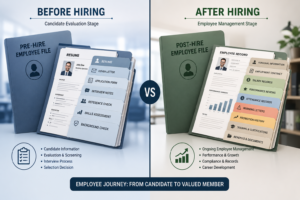
What’s REALLY Inside an Employee File?

By Nandana G S , Digital Marketing Executive , Levelup HR Solutions

Employee documentation is one of the most overlooked yet critical functions in any organisation. While businesses focus on hiring, payroll, and performance, the structure and completeness of employee files often receive minimal attention — until a compliance issue or dispute arises.

A well-maintained employee file is not just a record. It is a legal safeguard, a compliance requirement, and a foundation for effective HR management.

Why Employee Files Matter

Employee files are not administrative formalities. They serve three critical functions:

  • Legal protection — in case of disputes, terminations, or claims
  • Compliance readiness — for labour law inspections and audits
  • Operational clarity — for payroll, performance management, and internal decisions

If it is not documented, it is difficult to defend.

The Core Principle: Structure Over Storage

The problem is not that documents are missing. The problem is that they are unstructured.

A well-maintained employee file should be divided into clear sections, each serving a specific purpose.

1. Pre-Employment Documents

These are collected before or at the time of hiring.

Must include:

  • Resume / CV
  • Job application form (if applicable)
  • Interview evaluation records
  • Offer letter (signed copy)
  • Proof of identity (Aadhaar, PAN, Passport)
  • Address proof
  • Educational certificates
  • Previous employment documents (experience letters, relieving letters)

Why it matters: These documents validate the hiring decision and protect the company from misrepresentation or background-related disputes.

2. Employment Contract & Policy Acknowledgements

This is the legal foundation of employment.

Must include:

  • Appointment letter / employment contract
  • Job description (if separate)
  • Compensation structure (CTC breakup)
  • Signed policy acknowledgements (HR manual, code of conduct, IT policy, leave policy, etc.)
  • Non-disclosure agreement (NDA), if applicable

Why it matters: This section defines the terms of employment. Any ambiguity here becomes a dispute later.

3. Payroll & Statutory Records

This section is often incomplete in SMEs — and that creates compliance risk.

Must include:

  • PAN and bank account details
  • PF (UAN) details
  • ESI registration (if applicable)
  • Salary revision letters
  • Bonus / incentive documentation
  • Tax declarations and proofs
  • TDS computation summaries

Why it matters: Payroll is not just payment — it is a statutory process. Missing or inconsistent records can lead to penalties.

4. Attendance, Leave & Working Records

These records support payroll accuracy and compliance.

Must include:

  • Attendance records (biometric / digital logs)
  • Leave applications and approvals
  • Overtime records (if applicable)
  • Shift schedules (for applicable roles)

Why it matters: These documents support wage calculations and defend the organisation in case of wage or overtime disputes.

5. Performance & Appraisal Records

Performance documentation is critical — especially during promotions, increments, or terminations.

Must include:

  • KPI / KRA definitions
  • Performance reviews and appraisal forms
  • Increment letters
  • Promotion or role change letters
  • Performance improvement plans (PIP), if any

Why it matters: Decisions related to growth or termination must be backed by documented performance — not verbal assessments.

6. Disciplinary & Compliance Records

Most companies either avoid documenting this — or do it inconsistently.

Must include:

  • Warning letters
  • Show-cause notices
  • Investigation reports (if applicable)
  • Employee responses
  • Final disciplinary actions

Why it matters: Without proper documentation, disciplinary actions become legally weak and difficult to defend.

7. Asset & IT Access Records

This is often ignored — until assets go missing.

Must include:

  • Asset allocation records (laptop, phone, ID card, etc.)
  • IT access credentials (system access logs, where applicable)
  • Asset return acknowledgements

Why it matters: Protects company property and ensures accountability during exit.

8. Exit & Full-and-Final Settlement Records

The employee file is not complete until the exit is documented.

Must include:

  • Resignation letter or termination letter
  • Exit interview records
  • Notice period documentation
  • Full-and-final settlement details
  • Relieving letter
  • Experience certificate

Why it matters: Improper exit documentation is one of the most common causes of post-employment disputes.

Common Mistakes SMEs Make

1. Missing documents Offer letters unsigned, policies not acknowledged, or incomplete KYC documents.

2. No updates Salary revisions, promotions, and role changes not documented properly.

3. Scattered storage Documents across emails, WhatsApp, physical files, and desktops.

4. No version control Multiple versions of the same document with no clarity on which is final.

5. Ignoring exit documentation Files closed without proper settlement or documentation.

Manual vs Digital Employee Files

Manual files can work for very small teams. But they come with limitations:

  • Difficult to access
  • Prone to loss or damage
  • No audit trail
  • Hard to scale

Digital employee files provide:

  • Centralised access
  • Better security
  • Easy retrieval
  • Audit readiness
  • Scalability

The key is not just digitisation — but structured digitisation.

Best Practices for Maintaining Employee Files
  • Standardise file structure across all employees
  • Use checklists to ensure completeness
  • Keep documents updated in real-time
  • Maintain confidentiality and access control
  • Digitise with proper folder hierarchy and naming conventions
  • Conduct periodic audits of employee file

Closing Thought

An employee file is not just paperwork.

It is the documented story of the employment relationship — every decision, every change, every obligation.

Well-maintained employee files reduce risk, improve clarity, and strengthen compliance.

Poorly maintained files do the opposite — silently, until it is too late.

The difference is not in how many documents you have. It is in how well they are structured, maintained, and managed.

At Level UP HR Solutions, we help businesses build complete, compliant, and audit-ready employee documentation systems — both manual and digital.

12May

Is Your Company Ready for a Labour Inspection in 2026?

By, Rose Maria Francis

Digital Marketing Executive,

Level Up HR Solutions

Most businesses do not fail labour inspections because they intentionally break the law. They fail because they are unprepared.

A missing register. An outdated policy. An incorrect wage calculation.

Small gaps  with large consequences.

With increasing digitisation and stricter enforcement, labour inspections in 2026 are not just procedural — they are precise, data-driven, and documentation-focused.

This article outlines what inspectors typically look for, where SMEs go wrong, and how to ensure your business is fully prepared.

What Has Changed in Labour Inspections

Labour inspections today are no longer random, paper-based checks.

They are:

  • Data-driven — triggered by filings, complaints, or inconsistencies
  • Digitally supported — cross-verification with PF, ESI, and payroll records
  • Documentation-heavy — emphasis on records, not explanations

The expectation is simple: If it is not documented, it does not exist.

What Inspectors Typically Check

While requirements vary by establishment, most inspections focus on three areas:

1. Employee Documentation
  • Appointment letters issued and signed
  • Employee identity and KYC records
  • Attendance and leave records
  • Wage structure and salary breakup

Risk area: Missing or unsigned documents.

2. Payroll & Statutory Compliance
  • Salary payments aligned with minimum wage laws
  • PF and ESI registration and contributions
  • TDS deductions and filings
  • Bonus calculations and payments

Risk area: Incorrect calculations or delayed filings.

3. Registers & Records
  • Statutory registers (wages, attendance, overtime, etc.)
  • Leave records and holiday lists
  • Inspection registers
  • Digital or physical record maintenance

Risk area: Incomplete or outdated registers.

4. Policies & Workplace Compliance
  • Leave policy
  • Code of conduct
  • POSH compliance (Internal Committee, policy, records)
  • Working hours and overtime compliance

Risk area: Policies exist but are not implemented or documented.

Common Mistakes SMEs Make

1. “We’ll fix it if inspection happens” mindset Compliance cannot be created overnight.

2. Partial documentation Some employees fully documented, others not.

3. Payroll errors Incorrect PF, ESI, or bonus calculations.

4. No audit trail No record of updates, approvals, or changes.

5. Ignoring digital compliance Mismatch between filed data and internal records.

Manual vs Digital Readiness

Many SMEs still rely on:

  • Excel payroll
  • Physical registers
  • Scattered employee files

This creates risk during inspections.

Digitally structured systems provide:

  • Instant access to records
  • Accurate calculations
  • Audit-ready documentation
  • Consistency across all employees

The goal is not just digitisation — but organised, verifiable data.

A Practical Labour Inspection Checklist

If your company is inspection-ready, you should be able to confidently answer “yes” to all of the following:

  • Are all employee files complete and updated?
  • Are appointment letters issued and signed?
  • Are payroll records accurate and consistent with filings?
  • Are PF, ESI, and TDS properly calculated and filed?
  • Are statutory registers maintained and updated?
  • Are policies documented and acknowledged by employees?
  • Is your data consistent across systems and filings?

If the answer to any of these is “no” — there is a gap.

How to Prepare — The Right Approach

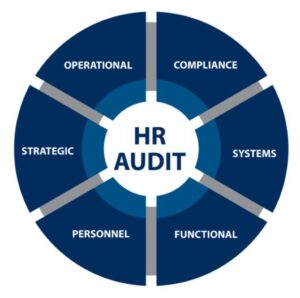
1. Conduct an internal HR audit Identify gaps before an inspector does.

2. Standardise documentation Ensure consistency across all employees.

3. Digitise with structure Centralised, accessible, and secure records.

4. Align payroll with compliance No manual approximations — only accurate calculations.

5. Train your HR/admin team Awareness is as important as documentation.

6. Review regularly Compliance is ongoing, not one-time.

The Cost of Being Unprepared

Labour inspections do not just result in penalties.

They can lead to:

  • Financial liabilities
  • Legal complications
  • Operational disruption
  • Reputation damage

In contrast, a well-prepared company handles inspections with confidence and clarity.

Closing Thought

Labour inspection readiness is not about fear. It is about discipline.

The businesses that pass inspections smoothly are not the ones scrambling at the last moment — they are the ones that treat compliance as a continuous process.

Because when everything is documented, updated, and aligned — inspection is no longer a risk. It is just a formality.

At Level UP HR Solutions, we help businesses audit, structure, and manage HR compliance systems to ensure they are always inspection-ready.

06May

2026 Labour Laws: Big Changes You Must Know

India’s new labour codes represent one of the most significant shifts in employment regulation in decades. While much of the discussion has focused on compliance and payroll restructuring, the deeper impact lies in how employee benefits are calculated, delivered, and experienced.

The changes go beyond legal reform. They redefine the balance between take-home salary and long-term financial security.

A Structural Shift in Compensation Philosophy

At the core of the new labour framework is a standardised definition of wages.

In most cases: Basic pay and dearness allowance must constitute at least 50% of total remuneration.

This single change has a cascading effect across all employee benefits because most statutory entitlements are calculated based on “wages.”

The result is a fundamental shift:

From flexible, allowance-heavy salaries To structured, benefit-linked compensation

1. Provident Fund: Higher Contributions, Stronger Retirement

Under the new wage definition, a larger portion of salary qualifies for provident fund calculations.

What changes:
  • Higher employee and employer PF contributions
  • Increased retirement corpus over time
  • Reduced flexibility to minimise PF through allowances

As the wage base increases, PF contributions rise proportionally.

Impact: Short-term take-home salary may reduce, but long-term financial security improves significantly.

2. Gratuity: Increased Value and Wider Coverage

Gratuity calculations are directly linked to wages. With higher basic pay:

  • Gratuity payouts increase
  • Long-term employees benefit more
  • Fixed-term employees may become eligible sooner (in some cases after one year)

Impact: Gratuity transitions from a distant benefit to a more meaningful financial component.

3. Take-Home Salary: Likely Reduction for Many Employees

One of the most immediate and visible changes will be in monthly income.

Because:

  • PF and gratuity contributions increase
  • Allowances are reduced or reclassified

Many employees may see lower in-hand salary despite unchanged CTC.

Impact: A shift from short-term liquidity to long-term savings.

4. Bonus and Overtime: Higher Calculation Base

Since bonuses and overtime are linked to wage definitions:

  • Bonus eligibility and calculations may increase
  • Overtime payments rise due to higher base wages

Impact: Employees benefit from more accurate and standardised compensation for extra work.

5. Social Security Expansion: Broader Employee Coverage

The new labour framework significantly expands social security coverage.

New inclusions:

  • Gig workers
  • Platform workers
  • Contract and fixed-term employees

Impact: More workers gain access to:

  • Insurance
  • Retirement benefits
  • Welfare schemes

This marks a shift toward a more inclusive labour ecosystem.

6. Health, Welfare, and Work Conditions

The Occupational Safety and Health Code introduces additional employee-focused benefits:

  • Mandatory health and safety standards
  • Annual health check-ups (in certain sectors)
  • Improved working conditions

Impact: Employee well-being becomes a compliance requirement, not just a policy choice.

7. Faster Settlements and Exit Benefits

Another practical improvement:

  • Full and final settlement timelines are reduced (in many cases to within 2 days)

Impact: Employees receive dues faster, improving trust and financial continuity.

8. Standardisation Across Benefits

One of the most important but less visible changes is standardisation.

Previously:

  • Different laws used different definitions of wages

Now:

  • A single definition applies across PF, gratuity, bonus, and other benefits

Impact:

  • Reduced ambiguity
  • Greater transparency
  • Easier enforcement
Who Gains and Who Feels the Pressure?
Beneficiaries
  • Long-term employees
  • Early-career professionals (higher retirement savings)
  • Gig and unorganised workers (new coverage)
Those Impacted
  • High earners (lower take-home pay initially)
  • Companies with allowance-heavy salary structures
  • Businesses unprepared for increased statutory costs (estimated 5–15% increase)
What This Means for Employers

For organisations, this is not just a compensation change—it is a systems and strategy shift.

Key actions include:

  • Redesigning salary structures
  • Recalculating benefit liabilities
  • Aligning HR documentation and payroll
  • Preparing for increased compliance scrutiny
Conclusion

The 2026 labour reforms redefine employee benefits in India.

They move the system toward:

  • Greater transparency
  • Stronger social security
  • Standardised compliance

But they also introduce trade-offs.

Lower take-home pay today In exchange for stronger financial security tomorrow

For businesses and employees alike, the question is no longer what is changing.

The 2026 labour law reforms are not just regulatory changes—they directly impact how employee benefits are structured, delivered, and governed.

Businesses that proactively realign their compensation and benefits policies will not only stay compliant but also build stronger employee trust and retention.

Getting these changes right requires a clear understanding of both the legal framework and your business model—that’s where structured HR expertise becomes critical.

The upcoming 2026 labour law changes will significantly impact how employee benefits are structured—from PF and ESIC contributions to gratuity, leave policies, and overall compensation design.

If your current policies are outdated or unclear, this is the right time to review and realign them.

If what we identify is something you’d like support with, we can help you implement the changes effectively. If you prefer to take the insights and execute internally, that’s entirely your choice.

28Apr

“Kerala SMEs: Audit These 10 HR Areas”

Running a business in Kerala comes with a clear set of compliance obligations. Some fall under central laws, others under state regulations, and a few are shaped by local employment practices.

However, most Kerala SMEs are not intentionally non-compliant. In many cases, they simply lack clarity on what they must maintain, file, and document. This gap usually becomes visible only during an inspection, dispute, or statutory notice.

To address this, use this checklist as a practical guide. It covers ten key areas that every Kerala SME should review at least once a year. Ideally, you should complete this review before major business events such as scaling, fundraising, or ownership changes.

Go through each section honestly. Instead of treating gaps as failures, see them as opportunities to build an HR function that actively protects your business.

Area 1 Kerala Shops and Commercial Establishments Act Compliance

The Kerala Shops and Commercial Establishments Act governs most businesses in the state, including shops, offices, hotels, restaurants, and service providers. Therefore, it forms the foundation of your state-level compliance.

What to review:

  • Register your establishment under the Act and renew it annually where required
  • Ensure working hours comply with limits (8 hours per day, 48 hours per week)
  • Document and follow a weekly rest day
  • Maintain mandatory registers such as attendance, wages, leave, and overtime
  • Issue wage slips to employees regularly
  • Provide written employment terms to all employees

Kerala-specific note:
While the Act applies to municipal and notified areas, panchayat areas may follow different rules. So, confirm the applicable jurisdiction for your business.

Area 2 EPF (Provident Fund) Compliance

Once your workforce crosses 20 employees, EPF compliance becomes mandatory. Therefore, timely registration and accurate contributions are critical.

What to review:

  • Register with EPFO immediately after crossing 20 employees
  • Calculate PF on Basic + DA, not total CTC
  • Deposit contributions before the 15th of every month
  • File monthly ECR accurately and on time
  • Activate and link UAN with Aadhaar for all employees
  • Enrol new employees within the required timeline
  • Check for any delays between eligibility and registration

Penalty risk:
Late payments attract 12% annual interest along with penalties of up to 25% of dues. So, regularly review your EPFO portal for notices.

Area 3 ESI (Employees’ State Insurance) Compliance

ESI ensures medical and social security benefits for eligible employees. Once you cross 10 employees, this becomes applicable.

What to review:

  • Register with ESIC after reaching 10 employees
  • Deduct ESI only for employees earning up to ₹21,000
  • Apply correct contribution rates (0.75% employee, 3.25% employer)
  • Pay contributions before the 15th of each month
  • File returns on time
  • Issue ESI cards and activate IP numbers
  • Submit half-yearly returns within deadlines

Kerala-specific note:
ESI applies to a wide range of establishments, including educational and medical institutions. So, confirm whether your category falls under coverage.

Area 4 Professional Tax Compliance

Professional Tax is a state-level obligation that applies to both employers and businesses.

What to review:

  • Obtain both PTRC and PTEC registrations
  • Deduct PT as per Kerala slabs
  • Pay PT within the due date
  • Pay employer PT (PTEC) every half-year

Current PT slabs:

  • Up to ₹11,999 → Nil
  • ₹12,000 – ₹17,999 → ₹120 (half-yearly)
  • ₹18,000+ → ₹240 (half-yearly)

Since rates may change, always verify with the Kerala Revenue Department.

Area 5 Employment Documentation

Proper documentation strengthens your legal position and reduces disputes.

What to review:

  • Maintain signed appointment letters for all employees
  • Include key clauses such as notice period, confidentiality, and termination
  • Issue clear offer letters reflecting agreed CTC
  • Document salary revisions and promotions
  • Maintain records of warnings and disciplinary actions
  • Complete and sign full & final settlements
  • Keep updated employee files

Risk note:
Missing or unsigned appointment letters often create major issues during disputes.


Area 6 Payroll Records and Salary Compliance

Accurate payroll practices ensure both compliance and employee trust.

What to review:

  • Issue salary slips every month
  • Clearly show all components (Basic, HRA, allowances, deductions)
  • Align payroll with the CTC mentioned in appointment letters
  • Maintain wage registers as required
  • Follow Kerala minimum wage notifications
  • Calculate and pay overtime correctly
  • Use banking channels for salary payments where required

Kerala-specific note:
Since minimum wages are revised periodically, keep your payroll updated with the latest notifications.

Area 7 POSH Act Compliance

The POSH Act ensures a safe workplace and is legally mandatory.

What to review:

  • Maintain a written POSH policy
  • Communicate the policy to all employees
  • Form an Internal Committee (minimum four members)
  • Include an external member
  • Train committee members
  • Submit annual reports
  • Conduct awareness sessions regularly

Penalty risk:
Non-compliance can lead to fines up to ₹1,00,000 and even licence cancellation. More importantly, it increases employer liability in complaints.

Area 8 Gratuity Compliance

Gratuity is a long-term financial obligation that requires planning.

What to review:

  • Provision gratuity liability in accounts
  • Calculate correctly (15 days’ wages per year of service)
  • Track employees nearing eligibility (5 years)
  • Pay gratuity within 30 days
  • Display the Act as required

Important note:
Once applicable (10+ employees), the Act continues even if headcount drops.

Area 9 HR Policy Documentation

Clear HR policies create consistency and reduce confusion.

What to review:

  • Maintain a written HR policy
  • Get employee acknowledgements
  • Align leave policies with legal requirements
  • Define disciplinary procedures
  • Create a grievance redressal system
  • Review policies annually
Area 10 Onboarding and Exit Documentation

Strong processes at entry and exit reduce both legal and operational risks.

What to review:

  • Use structured onboarding forms
  • Collect PF, ESI, and bank details
  • Conduct background checks where needed
  • Follow a documented exit process
  • Complete full & final settlements on time
  • Issue experience and relieving letters promptly
  • Conduct exit interviews
  • Revoke access to systems and data immediately

Risk note:
Poor exit management often leads to disputes and data security issues.

How to Use This Checklist

Mark each area as:

  • Green — Fully compliant
  • Amber — Partially compliant
  • Red — Non-compliant

Prioritize all red items first. Then address amber items with clear timelines. Finally, review green areas annually to maintain compliance.

If you notice more amber and red than green, don’t worry. This is common for growing SMEs. However, it also signals the need for a professional HR audit.

Closing Thought

Compliance does not slow down growth. Instead, it enables sustainable and risk-free expansion.

Businesses in Kerala that scale successfully focus on building strong HR foundations. They don’t aim for perfection, but they ensure systems work properly.

Use this checklist as your starting point. What matters most is how you act on it.

At Level UP HR Solutions, we conduct structured HR audits for Kerala and pan-India SMEs. Our process covers all these areas and more. We provide a clear report, identify compliance gaps, and deliver a practical action plan.

27Apr

Is HR Outsourcing Worth It?

Recruitment Consulting Venn Diagram

Every growing business reaches a point where someone — usually the founder, sometimes a finance manager, occasionally an office administrator — is spending a significant portion of their week managing HR tasks they were never trained for.

Payroll processing. PF and ESI filings. Leave tracking. Offer letters. Compliance registers. Salary slips. Show cause notices. Exit settlements.

None of these are simple. All of them carry risk if done incorrectly. And all of them pull the person handling them away from the work they were actually hired to do.

This is the moment when HR outsourcing becomes worth a serious conversation.

What is HR outsourcing?

HR outsourcing is the practice of engaging an external specialist — an HR consulting firm or managed HR services provider — to handle some or all of your HR functions on your behalf.

It is not the same as hiring a staffing agency or a contractual HR executive. It is a service relationship in which a dedicated team manages defined HR functions for your business, with accountability, process, and expertise built in.

What gets outsourced varies by business. The most common model for Indian SMEs involves outsourcing payroll processing and compliance — PF, ESI, PT, TDS, monthly filings, and salary slip generation. Beyond payroll, businesses also outsource HR documentation, HR audits, policy drafting, onboarding administration, and exit management.

Some businesses outsource everything HR-related. Others outsource only the parts they find most complex or time-consuming. Both approaches are valid — what matters is that the outsourced work is handled by people who do it every day, not by someone who does it in addition to three other jobs.

What HR outsourcing is not

Before going further, it is worth being clear about what HR outsourcing does not mean.

It does not mean losing control of your people decisions. Hiring, promoting, managing performance, and building culture remain entirely in your hands. What an outsourcing partner handles is the administration and compliance behind those decisions — not the decisions themselves.

It does not mean your employees deal with a third party for everything. A good HR outsourcing partner works in the background. Your employees still experience your brand, your culture, and your management team. The outsourcing relationship is largely invisible to them — except in the quality of the output. Accurate payslips. Correct deductions. Timely settlements.

It does not mean you need a minimum number of employees. HR outsourcing is often most valuable for businesses with 10 to 150 employees — precisely because this range is too large to manage casually but too small to justify a full in-house HR team.

The business case for HR outsourcing

Let me be direct about the economics.

A dedicated in-house HR executive in Kerala, with the experience and knowledge to handle payroll compliance, statutory filings, documentation, and employee relations competently, costs between ₹25,000 and ₹50,000 per month in salary — plus PF, ESI, gratuity provisioning, leaves, and the cost of the tools they need. That is before accounting for the time it takes to hire, train, and retain them.

A well-structured HR outsourcing engagement covering the same scope of work — payroll processing, statutory compliance, documentation support, and HR advisory — typically costs a fraction of that for a business in the 20 to 75 employee range.

But cost is not the only consideration. The more important question is quality and risk.

An in-house generalist handles HR among other responsibilities. An outsourcing partner specialises. Their entire team does nothing but HR and payroll compliance, day after day. They keep up with regulatory changes — amendments to PF rules, ESI circulars, state labour law updates — because staying current is their core responsibility, not an extra task to fit in between other work.

What can be outsourced — and what cannot

Functions well-suited to outsourcing:

  • Payroll processing — end-to-end salary calculation, statutory deductions, bank transfer inputs, payslip generation, and monthly reconciliation.
  • Statutory compliance — PF, ESI, and PT filings; ECR submission; ESIC monthly returns; annual PF returns; Form 16 coordination.
  • HR documentation — drafting and reviewing offer letters, appointment letters, increment letters, warning letters, full and final settlement calculations, and experience certificates.
  • HR audits — periodic review of your HR practices, documentation, and compliance posture against current legal requirements.
  • Policy drafting — creating or updating your employee handbook, leave policy, code of conduct, POSH policy, and other HR documents.
  • Onboarding and exit administration — joining formalities, document collection, background verification coordination, and exit process management.

Functions that should stay in-house:

  • Performance management — appraisals, feedback conversations, and performance improvement plans require the context and relationship that only internal managers can provide.
  • Culture and engagement — team building, values communication, and employee experience are leadership responsibilities that cannot be delegated outward.
  • Hiring decisions — while sourcing and screening support can be outsourced, the decision about who joins your organisation should remain yours.
  • Conflict resolution involving sensitive interpersonal matters — these situations require someone with direct organisational context and authority.

The distinction is straightforward: outsource the process, retain the people decisions.

Signs that HR outsourcing is right for your business

You do not need to be in crisis to consider HR outsourcing. But certain patterns are strong signals that the current arrangement is not working:

Your founder or finance manager is doing payroll — and spending four to six hours on it every month, plus additional time on queries and corrections. That time has a cost, and it is rarely the best use of a senior person’s attention.

You have received a statutory notice or query — from EPFO, ESIC, or a state labour department. This is a signal that your compliance process has gaps.

Your payroll generates queries every month — employees raising questions about deductions, missing reimbursements, or incorrect components. Frequent payroll queries are a symptom of a process problem, not just a communication problem.

You are about to scale significantly — adding 10 or 20 employees in a short period changes your compliance obligations, your documentation requirements, and the complexity of your payroll. It is far easier to onboard an outsourcing partner before the scaling happens than after.

You are preparing for due diligence — investors, acquirers, and lenders increasingly scrutinise HR compliance as part of due diligence. Clean payroll records, filed returns, and documented HR practices materially affect how your business is perceived.

You have had a compliance finding in an audit — and recognise that fixing it requires more than good intentions. It requires a process run by people who know what compliant looks like.

How to evaluate an HR outsourcing partner

Not all HR outsourcing providers are equal. When evaluating a partner, ask:

What is their statutory compliance track record? Can they demonstrate on-time filing records, zero-penalty history, and familiarity with both central and state-level regulations relevant to your business?

Who actually does the work? Some providers sell the engagement and hand it to a junior team member with limited experience. Understand who your day-to-day point of contact will be and what their background is.

How do they handle errors? Every payroll process, however good, will occasionally produce an error. How the provider responds — how quickly, how transparently, and how they prevent recurrence — tells you more about their culture than their pitch deck.

What does the contract actually cover? Ensure the scope of work is specific — not broad language about “HR support” but defined deliverables, turnaround times, and escalation paths.

Are they familiar with your industry and state? HR compliance in Kerala has state-specific dimensions — the Kerala Shops and Commercial Establishments Act, state labour welfare contributions, and local norms — that a provider unfamiliar with the region may not handle correctly.

Is HR outsourcing right for your business?

Here is an honest answer: it depends on where you are.

If you have 10 to 150 employees and HR is being handled by someone who is not an HR specialist — outsourcing is almost certainly worth evaluating seriously. The cost of getting it wrong compounds faster than most businesses expect.

If you have more than 150 employees and a partial in-house team — a hybrid model, where an outsourcing partner handles specific functions such as payroll compliance and auditing alongside your in-house HR person, is often the right structure.

The question is not whether outsourcing is right in the abstract. It is whether the current arrangement is actually working — for your compliance posture, for your employees, and for the time of the people currently managing it.

Closing thought

HR is not a back-office function. Done well, it protects your business, supports your team, and frees your leadership to focus on growth.

At Level UP HR Solutions, we work with Indian SMEs across Kerala and beyond to deliver payroll outsourcing, HR compliance, documentation, and audit services — with the responsiveness of a dedicated team and the expertise of specialists.

If you would like to understand what an outsourcing engagement would look like for your business, we are happy to start with a no-obligation conversation.