
By Nandana G.S , Digital Marketing Executive
For small and medium-sized businesses, HR documentation can easily become an afterthought.
When a company is growing quickly, the focus is often on hiring employees, processing salaries, managing daily operations, and meeting business targets. But without proper documentation, even a well-managed HR function can become difficult to track, audit, and manage.
Employee records, appointment documents, policies, attendance records, payroll information, performance documents, and exit records all form part of an organization’s HR documentation system.
A structured documentation process helps SMEs maintain consistency throughout the employee lifecycle.
Why HR Documentation Matters for SMEs
HR documentation is not simply about keeping files.
It creates a record of important employee-related decisions, processes, approvals, and communications.
Good documentation can help businesses:
Maintain accurate employee records
Standardize HR processes
Support payroll processing
Track employee lifecycle activities
Improve audit readiness
Reduce administrative confusion
Establish clearer responsibilities
Support compliance requirements applicable to the organization
For SMEs, creating a documentation system early can make HR management much easier as the company grows.
The Complete HR Documentation Checklist
1. Company & HR Policy Documents
Every organization should identify the policies relevant to its size, workforce, industry, and applicable legal requirements.
Examples include:
✔️ Employee handbook ✔️ Code of conduct ✔️ Leave and attendance policy ✔️ Work-from-home/remote work policy, where applicable ✔️ Working hours policy ✔️ Travel and reimbursement policy ✔️ Performance management policy ✔️ Disciplinary procedure ✔️ Grievance procedure ✔️ POSH-related documentation, where applicable ✔️ Information security/confidentiality policies
Policies should not simply exist as documents. Employees should be appropriately informed about policies relevant to them, and required acknowledgements should be maintained.
2. Recruitment Documentation
Documentation begins before an employee joins the organization.
A structured recruitment file may include:
Job description
Job requisition/approval
Candidate application or resume
Interview records
Assessment results, where applicable
Selection approval
Salary/offer approval
Offer letter
Relevant candidate communication
Maintaining recruitment records can help HR understand how hiring decisions were made and ensure a more consistent recruitment process.
3. Pre-Joining & Employee Verification Documents
Before onboarding, organizations may need to collect and verify appropriate employee information.
Depending on the role and organization, this may include:
✔️ Identity documents ✔️ Address/contact information ✔️ Educational qualifications ✔️ Previous employment details ✔️ Bank account information ✔️ PAN and other applicable tax information ✔️ PF/UAN-related information, where applicable ✔️ ESI-related information, where applicable ✔️ Emergency contact details ✔️ Background verification records, where applicable
Only information that is genuinely required should be collected and handled appropriately.
4. Joining & Onboarding Documents
A new employee’s personnel file should be created systematically.
Important documents may include:
Appointment/employment letter
Joining report
Employee information form
Document verification checklist
Confidentiality/NDA documentation, where applicable
Policy acknowledgement
Code of conduct acknowledgement
Bank/payroll details
Statutory declarations or forms, where applicable
Onboarding checklist
A standardized onboarding checklist reduces the chance of important steps being missed.
5. Employee Master Data
The employee master record is one of the most important HR records.
It may contain:
Employee ID | Name | Department | Designation | Joining Date | Location | Reporting Manager | Salary Details | Employment Status
Additional information can be maintained where required for payroll, statutory, or operational purposes.
The key is to ensure that the employee master data remains accurate and updated.
6. Attendance & Leave Records
Attendance and leave records can directly affect payroll and employee management.
Organizations should maintain appropriate records of:
✔️ Attendance ✔️ Leave applications ✔️ Leave approvals ✔️ Holidays ✔️ Late/early attendance records, where applicable ✔️ Overtime records, where applicable ✔️ Leave balances
Clear records can reduce disputes and make payroll processing easier.
7. Payroll & Salary Documentation
Payroll documentation should be capable of being reconciled with HR records.
Depending on the organization’s structure, this may include:
Salary structure
Salary revision letters
Payroll registers
Payslips
Incentive/bonus records
Deduction records
Reimbursement records
Salary advance records
Payroll approvals
Statutory contribution records
TDS-related salary records
Regular reconciliation between HR, payroll, and finance can help identify inconsistencies early.
8. Statutory Compliance Records
Statutory documentation depends on the organization’s workforce, location, establishment type, and applicable laws.
Where applicable, businesses may need to maintain records relating to:
PF
Employee/UAN information
Contribution records
Payment records
Applicable filings/returns
ESI
Employee-related records
Contribution information
Payment records
Applicable filings
Professional Tax
Employee applicability records
Deduction records
Payment/return records, where applicable
TDS
PAN details
Investment declarations/proofs as applicable
Salary/TDS calculations
Challans
Returns/forms
Relevant certificates
Labour Welfare Fund
Where applicable, maintain employee contribution, employer contribution, payment, and filing records as required under the relevant state framework.
Important: Statutory requirements can differ based on state, establishment, employee category, and applicable legislation. SMEs should verify the current requirements applicable to their organization.
9. Performance Management Documents
Performance documentation helps create a structured record of employee development and performance discussions.
This can include:
✔️ Performance goals ✔️ KPI/KRA documents ✔️ Review forms ✔️ Performance feedback ✔️ Appraisal records ✔️ Increment letters ✔️ Promotion letters ✔️ Performance improvement plans, where applicable ✔️ Training and development records
Documentation should focus on clear, objective records rather than informal comments or unsupported assessments.
10. Employee Training & Development Records
Organizations should track relevant employee learning activities.
Examples:
Training needs
Training schedules
Attendance
Certificates
Training feedback
Skill development plans
Internal training records
This helps HR understand what development activities have been provided and where additional training may be needed.
11. Employee Grievance & Disciplinary Records
Where an employee issue requires formal action, relevant documentation should be maintained appropriately.
Depending on the situation, records may include:
Employee complaint/grievance
Investigation-related documentation
Employee responses
Meeting records
Formal warnings
Corrective action
Resolution records
These records should be handled confidentially and accessed only by authorized personnel.
12. Employee Lifecycle Changes
Employee records should be updated whenever important changes occur.
Examples include:
Promotion → Transfer → Department Change → Salary Revision → Role Change → Location Change → Manager Change
Supporting approvals and relevant documentation should be maintained.
A common HR problem is updating one record while forgetting to update another.
13. Resignation & Exit Documentation
Employee documentation should continue until the end of the employment relationship.
An exit checklist can include:
✔️ Resignation letter ✔️ Resignation acknowledgement ✔️ Notice-period records ✔️ Handover documentation ✔️ Asset clearance ✔️ Attendance/leave reconciliation ✔️ Salary and recovery calculations ✔️ Full & final settlement ✔️ Exit interview, where applicable ✔️ Relieving letter ✔️ Experience/service certificate, where applicable ✔️ Statutory updates
This creates a clear record of the employee’s exit process.
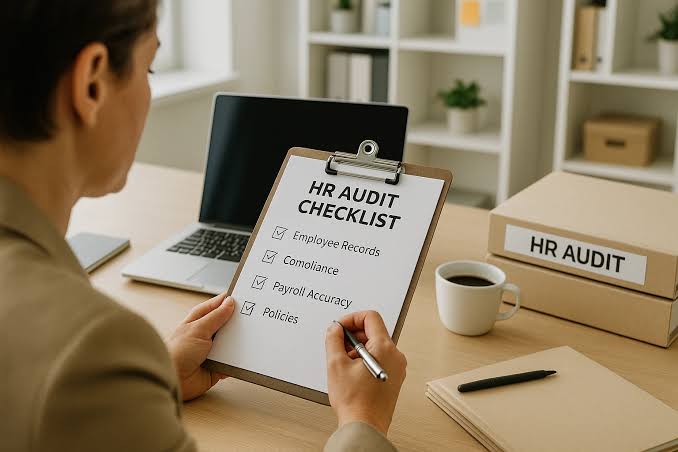
14. HR Audit Documentation
SMEs should also maintain evidence that important HR processes are actually being carried out.
Examples include:
HR checklists
Compliance calendars
Payroll reconciliation reports
Employee file audits
Policy acknowledgements
Approval records
Statutory payment records
Corrective-action records
Audit findings and closure records
An HR audit is much easier when documentation is organized throughout the year rather than collected at the last minute.
A Simple SME HR Documentation Structure
Businesses can organize their HR documentation around the employee lifecycle:
Before Joining
Recruitment → Selection → Offer → Verification
Joining
Appointment → Documentation → Onboarding → Payroll Setup
During Employment
Attendance → Leave → Payroll → Compliance → Performance → Training → Employee Changes
Exit
Resignation → Handover → Clearance → Full & Final → Exit Documentation
This creates a simple framework that HR teams can follow consistently.
How Often Should HR Documents Be Reviewed?
HR documentation shouldn’t be created once and forgotten.
Monthly
Review:
Employee master data
Attendance and leave
Payroll records
New joiners
Employee exits
Applicable compliance records
Quarterly
Review:
Employee files
HR policies
Payroll reconciliation
Compliance documentation
Pending HR actions
Annually
Review:
HR policies
Employee documentation
Compliance framework
Performance records
HR processes
Audit readiness
The exact frequency should depend on the organization’s size, risk profile, workforce, and applicable requirements.
10 Questions Every SME Should Ask
Before considering its HR documentation system complete, a business should ask:
Do we have a complete employee file for every active employee?
Are joining and exit documents properly maintained?
Does our employee master data match payroll records?
Are attendance and leave records properly documented?
Are applicable statutory records maintained?
Are salary revisions properly approved and recorded?
Are important HR policies documented and communicated?
Are performance and employee development records maintained?
Can we quickly retrieve important HR documents when required?
Do we regularly audit our HR documentation for gaps?
If several answers are “No” or “Not sure,” it may be time for a structured HR documentation review.
Common HR Documentation Mistakes SMEs Should Avoid
❌ Maintaining employee information only in spreadsheets
Spreadsheets can be useful, but relying on scattered files without a controlled process can create inconsistencies.
❌ Collecting documents but not organizing them
Document collection is only the first step. Records should be organized and retrievable.
❌ Updating payroll without updating HR records
Salary revisions, role changes, and employee status changes should flow through the appropriate processes.
❌ Creating policies without implementation
A policy is useful only when the organization has a process for communicating and applying it.
❌ Preparing documents only when an audit happens
Good HR documentation should be maintained continuously.
How Level Up HR Solutions Can Help
Managing HR documentation can become challenging as an SME grows.
Level Up HR Solutions supports businesses with structured HR processes including:
✔️ HR Documentation ✔️ HR Audits ✔️ Payroll Management & Compliance ✔️ PF & ESI Compliance Support ✔️ HR Policy Documentation ✔️ Employee Lifecycle Documentation ✔️ HR Process Support ✔️ Statutory Compliance Support
The objective is to help businesses move from scattered HR records to a more organized, consistent, and audit-ready HR system.
Final Thoughts
For an SME, HR documentation is not just paperwork.
It is the foundation for maintaining accurate employee records, consistent processes, payroll coordination, compliance evidence, and better HR management.
The best time to organize HR documentation is before a problem occurs—not when someone suddenly asks for the records.
A simple principle can guide the process:
If an important HR activity happened, there should be an appropriate record of it.
And as your business grows, that documentation should grow with it.
Level Up HR Solutions
Compliance Partner for SMEs in India
📞 +91 8714805999 📧 info@leveluphrs.com 🌐 www.leveluphrs.com