
By Nandana GS
Digital Marketing Executive
It’s not just a pipeline. It’s a survival strategy.
“Who’s ready to step into my role in 3 years?” Most leaders can’t answer that. HR can change that.
In 2026, the gap between available leadership roles and truly ready internal candidates is widening. Why? Because traditional leadership development is broken. It’s too slow, too theoretical, and too disconnected from real business chaos.
HR is no longer just the “training department”. You are the architect of leadership velocity — the speed at which an organisation turns high-potential employees into high-impact leaders.
Here’s how HR can own future-leader development without wasting millions on fluffy programmes.
1. Stop Identifying “High Potentials” by Gut Feel
Most HiPo programmes are just popularity contests with spreadsheets.
What to do instead: Use skills-based + behavioural data – not just manager nomination.
- Look for learning agility (how fast someone adapts after failure)
- Look for network centrality (do others naturally seek them out for help?)
- Look for coaching behaviour (do they make their peers better?)
👉 HR action: Run a lightweight 360° “agility audit” twice a year. Identify 3–5 people who lift team performance, not just individual results.
2. Kill the “Leadership Training Course” (Mostly)
A 2-day offsite on “Situational Leadership” won’t survive a real Friday afternoon crisis. So instead of an annual leadership workshop, run monthly 90‑minute “live case” sessions using a real current problem from your business. Replace generic case studies with rotating shadowing of C‑suite decisions so future leaders see messy reality, not polished theory. And swap certificates for small‑stakes stretch assignments – like leading a cross‑functional fix in four weeks. HR’s real job is to create low‑risk, high‑feedback leadership experiences, not more certificates.
3. Make Managers the Engine, Not the Obstacle
Most managers hoard development because they fear losing their best people.
Fix the incentive:
- Tie manager bonuses to how many internal promotions happen from their team.
- Require every director to name two successors before they can apply for a new role themselves.
- Run “reverse mentoring” – future leaders teach current leaders about AI, Gen Z expectations, or new tools.
✅ HR’s role: Design the rules of the game so developing leaders becomes a business KPI, not a nice-to-have.
4. Use AI to Scale, Not Replace, Your Coaching
You can’t personally coach 200 future leaders. But you can augment yourself.
Try this in 2026:
- Use an AI coach (like a custom GPT) for daily “What would a good leader do here?” scenarios.
- Analyse meeting transcripts (anonymised) to spot who is asking questions, who is facilitating, and and who is interrupting.
- Give future leaders real‑time nudges – “You haven’t spoken in the last three meetings. Try one clarifying question today.”
💡 HR’s new skill: Curating AI‑driven developmental feedback that feels human.
5. Measure What Matters – Retention of Prepared Leaders
It’s not enough to say “we trained 50 people.”
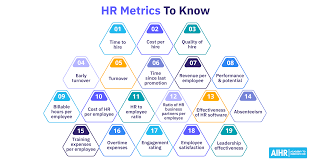
The only two metrics that matter:
- Internal promotion rate for your HiPo group (vs. external hires for similar roles)
- Voluntary turnover of future leaders – if they leave, you failed.
Build a simple dashboard:
“Of the people we tagged as future leaders 12 months ago, how many are now in a bigger role, and how many quit?”
If the answer hurts, you know where to start.
A Real‑World Example (Short Case)
Problem: A mid‑sized fintech kept losing team leads to competitors after 18 months. HR fix (minimal budget):
- Cancelled the annual leadership offsite.
- Created “90‑day sprints” – each future leader picked a real business problem (e.g., reducing onboarding time) and presented a solution to the CEO.
- Paired each with a peer coach, not a senior mentor.
Result in 9 months: 4 internal promotions, 0 attrition from the HiPo group, and two new products accelerated because of those sprints.
Final Word for HR Pros
You don’t need a bigger budget. You need better design.
Your job is to turn leadership development from a calendar event into a daily habit – where every project, every crisis, and every meeting becomes a leadership classroom.
And when a CEO asks, “Where will our next great leader come from?” – your answer should be confident, data‑backed, and immediate.
How Level Up HR Solutions Can Help
At Level Up HR Solutions, comprehensive HR documentation support is provided to ensure your business remains compliant, organised, and audit-ready.
✔ Policy drafting ✔ Employee file structuring ✔ Compliance documentation ✔ Payroll alignment




 Run an exit interview for every voluntary leaver. Ask one question: “On a scale of 1–10, how would you rate your manager?” Low scores here predict future voluntary turnover across the team.